History of the Flight
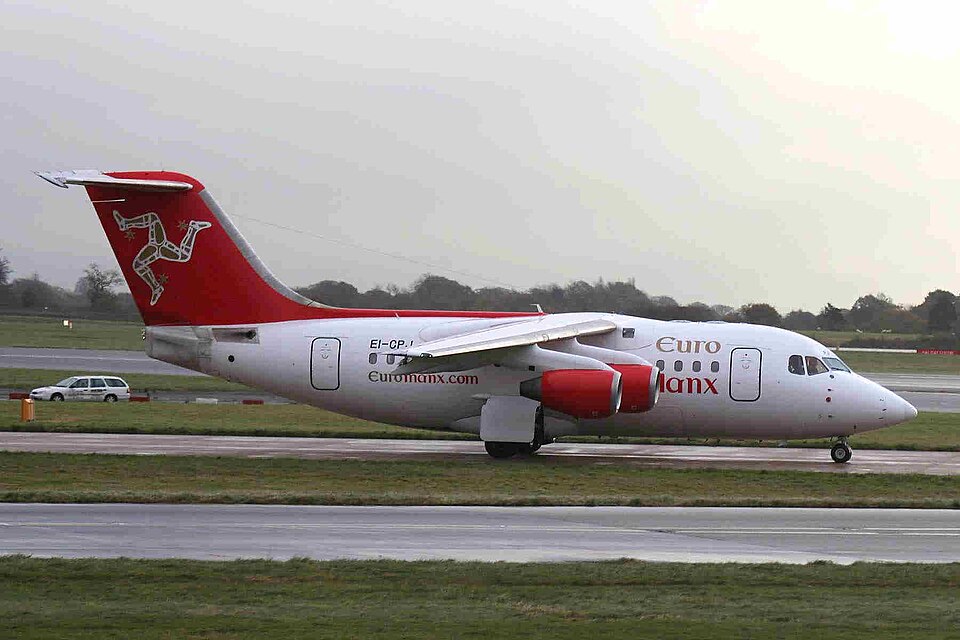
On 7 October 2005, a BAe 146 aircraft, registration EI-CPJ, operating a public transport passenger flight, landed on Runway 10 at London City Airport. After a gentle touchdown, the nose wheel began to vibrate upon contact with the runway. When the crew applied main wheel braking, the vibration intensified. The crew reduced brake pressure, but the vibration persisted and the nose wheel steering became inoperative. Due to the severity of the vibration, the aircraft was brought to rest as quickly as possible using moderate differential braking for directional control. The first officer transmitted a PAN call to air traffic control.
After stopping, airport Rescue and Fire Fighting Services attended. There was a brief communication difficulty where a fireman's message via handheld radio was not initially heard, but communications improved after a repeat. An engineer inspected the nose landing gear and informed the crew that a bolt was missing from the torque link assembly. The aircraft was towed to its stand and passengers disembarked normally. An extensive search for the missing bolt at London City Airport and the departure airfield was unsuccessful.
Aircraft Examination
A detailed inspection of the nose landing gear by the operator and specialists from the landing gear manufacturer confirmed that the central pivot bolt in the torque link assembly was missing. After the bolt detached, the upper half of the torque link pivoted downward, contacting a shoulder on the lower sliding part, effectively becoming a solid strut that prevented the oleo from compressing during the rollout. This caused the full nose weight (approximately 2.5 tonnes) to be supported by the trapped upper link. Localised damage was found on the nose leg and torque link components, but no other damage was present in the nose wheel bay or assembly.
The nose landing gear was removed and sent to the manufacturer. Subsequent tests revealed that the breakout torque of the nose wheel steering/castering friction damper was approximately 35–40% of the specified value. The manufacturer considered this would predispose the gear to a divergent shimmy oscillation of the type experienced. Additionally, evidence of internal oil leakage past the oleo strut seals was found, and its inflation pressure was approximately 28% above the specified value, apparently as compensation for oil loss. However, this over-inflation was not considered a causal factor in the shimmy or the bolt loss.
Findings
To date, no explanation has been found for the separation and loss of the torque link bolt assembly. It was not determined whether the missing bolt was the cause or a symptom of the shimmy that occurred during landing. The nose landing gear manufacturer is undertaking further detailed inspection as the unit undergoes repair and overhaul, and an addendum to the report may be issued if relevant information emerges.