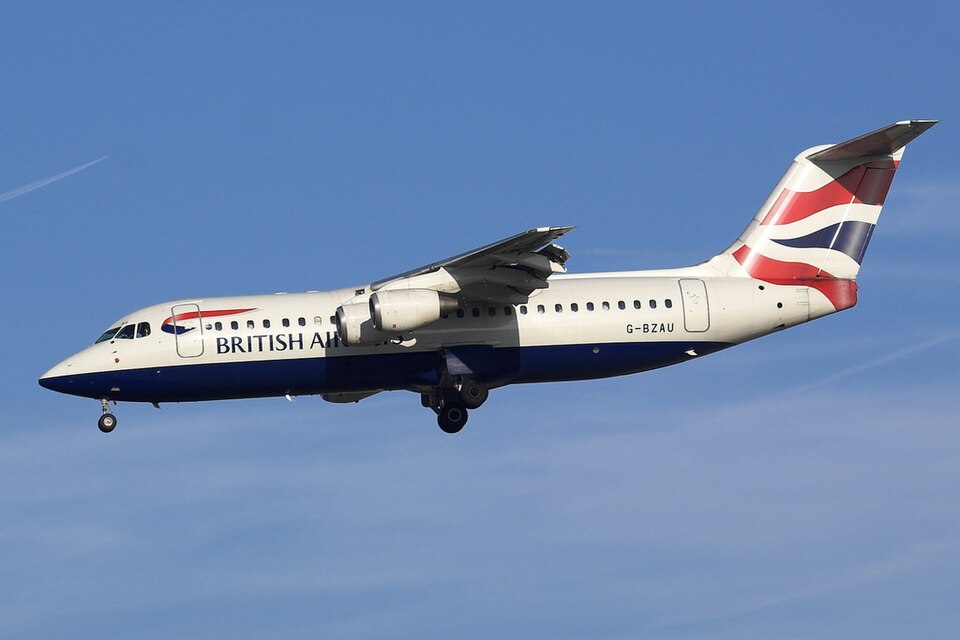
Incident Details
On 28 December 2002 at 0645 UTC, a BAe 146-RJ100, registration G-BZAU, was positioned on Stand 12 at Birmingham Airport. The aircraft, manufactured in 1998 and powered by four Lycoming LF507-1F turbofan engines, was configured for a public transport flight with two crew members onboard and no passengers. The commander, aged 27, held an Airline Transport Pilot's Licence and had accumulated 4,451 flying hours, including 2,127 hours on type.
Sequence of Events
The flight crew had entered the aircraft and commenced their pre-flight checks when they noticed the aircraft was moving and accelerating toward the airport terminal. Before they could intervene, the left wing struck an adjacent airbridge, bringing the aircraft to a halt. At that point, the crew observed a tug, with a towbar attached, driving away from the aircraft. Meteorological conditions at the time were good, and the ramp surface was dry. The aircraft had been correctly chocked and was not connected to the airbridge or a ground power unit; refuelling had not yet begun.
The tug driver, who had just started his duty period, had been tasked with moving the tug but did not realize it was attached to the aircraft via the towbar. As he drove the tug forward, it pulled the aircraft over the chocks and moved it approximately eight metres into the airbridge. The towbar then disconnected from the aircraft.
Aftermath
The incident resulted in damage to the No 1 and No 2 engines and the nose wheel of the aircraft, as well as to the adjacent airbridge. In response, the handling agents revised their aircraft towing procedures. Under the new procedures, when a towed aircraft arrives on stand and is correctly chocked, the tug and its towbar are removed from the aircraft and positioned at a safe distance from the nose.