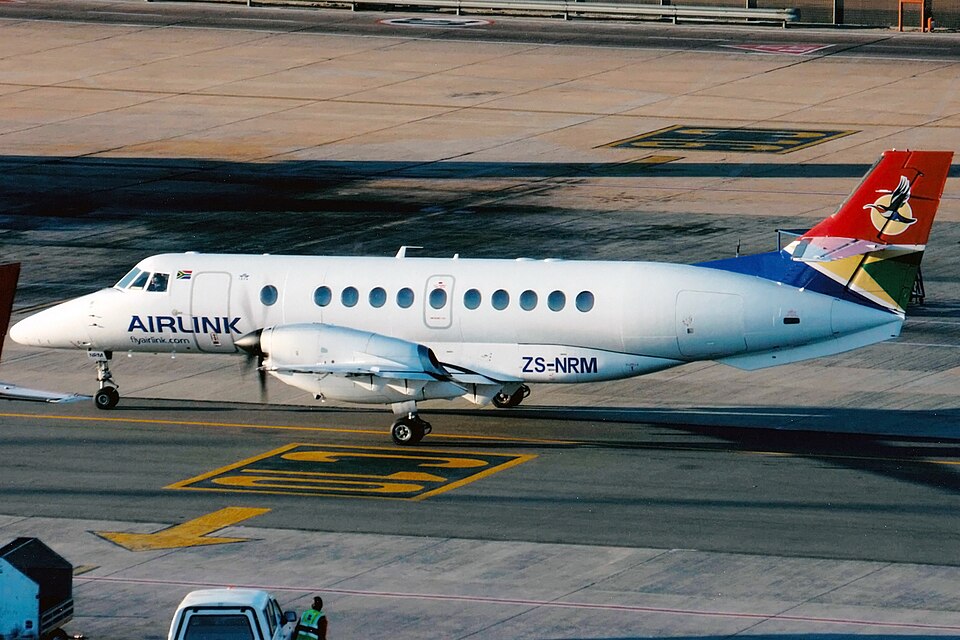
What happened
While performing its takeoff roll, the crew of ZS-NRM, an aircraft type, was observed by another airliner's cockpit crew to have smoke emitting from the right engine. The witnessing pilots contacted air traffic control to inquire if the flight crew was aware of the smoke, but the aircraft had already departed the runway before a response could be provided. During the initial climb, the landing gear remained extended. After being alerted by another aircraft at the holding point, the captain instructed the co-pilot via radio transmission to retract the undercarriage; during this exchange, an audible warning was noted in the background.
The aircraft type reached an altitude of roughly 500 feet above mean sea level before it began losing altitude. The flight ended in a forced landing within a small field located in the Merebank residential district, approximately 1.4 km from the runway threshold. During the impact, a bystander was struck by the wing. The accident resulted in three serious injuries to the crew members and one fatality, involving the captain who later succumbed to his wounds.
Findings
Investigations determined that the incident was caused by an engine failure following takeoff. This led to a loss of directional and lateral control because the crew misidentified which engine had failed and subsequently shut down the remaining functional engine. Technical analysis revealed that a second-stage turbine seal plate rim had separated. Furthermore, the crew failed to utilize standard crew resource management procedures or follow the established engine failure protocols outlined in the aircraft's flight manual.