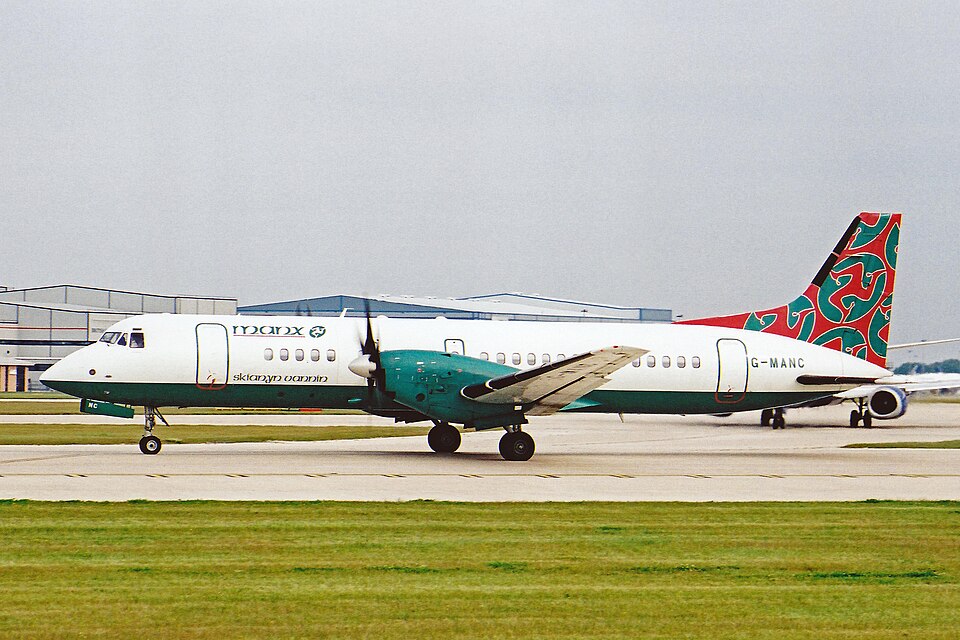
Incident Details
On 12 October 2002 at 0540 UTC, a BAe ATP aircraft (registration G-MANC) was parked on Stand 3 at Manchester International Airport, being prepared for a scheduled passenger flight. Heavy rain was falling at the time. The flight crew, seated in the flight deck, felt a violent shudder through the aircraft. The first officer looked out of her side window and observed that a bus had hit the right wing while reversing. The commander exited the aircraft to inspect the damage and spoke with the bus driver, who had been unaware of the collision until that moment.
The aircraft sustained damage to its right wingtip and aileron. There were no injuries among the four crew members; no passengers were on board.
Background
The aircraft was a BAe ATP manufactured in 1992, powered by two Pratt & Whitney Canada PW126 turboprop engines. The commander, aged 27, held an Airline Transport Pilot Licence and had accumulated 3,985 flying hours, of which 3,413 were on type.
Guidance and Procedures
Civil Aviation Publication (CAP) 642, 'Airside Safety Management', provides guidance that vehicles must not be driven in reverse on the manoeuvring area or apron unless directly engaged in aircraft manoeuvring or servicing. When reverse movement is essential, guidance should be provided to the driver by a person outside the vehicle.
The airport operator had issued an Airside Safety Instruction (ASI) in August 2001, requiring all drivers to use a banksman for external guidance when reversing any vehicle on the apron. Multi-crewed vehicles were to use at least one crew member as a banksman. For single-crewed vehicles, the ASI required organisations to provide a risk assessment for reversing but did not explicitly mandate a second person. The ASI noted that reversing dangers were particularly high during aircraft turnround, where space is often limited.
Findings
In this incident, the vehicle involved was single-crewed. It was the driver's responsibility to arrange suitable external guidance before reversing, but this was not carried out.