History of the Event
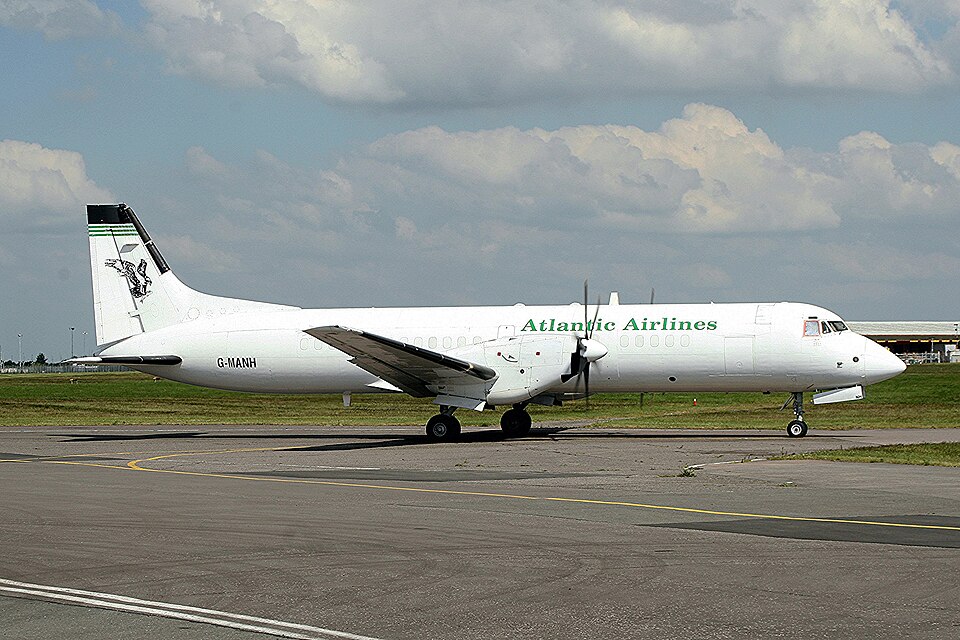
On 17 November 1999, at 1034 UTC, a BAe ATP (registration G-MANH) was pushed back from the stand and taxied without incident to the holding point of Runway 06 at Manchester Airport. The aircraft was cleared by ATC to taxi onto the runway to line up for takeoff. As the pilot began to turn the aircraft onto the runway centerline, it oscillated violently from left to right. The pilot stopped the aircraft, and the crew inspected the main landing gears through the windows, seeing nothing obviously wrong. They requested permission to taxi clear of the runway and contacted company engineering for advice. During subsequent taxiing, oscillations did not occur while taxiing straight but resumed immediately upon turning. The aircraft taxied clear, passengers disembarked into buses, and engineers inspected the aircraft on the taxiway.
Engineering Findings
Engineers found that the apex pin from the right main landing gear torque links was missing. The pin was subsequently found on the runway close to the centerline; the nut was found between the holding point and the runway. Neither the locking bolt nor its nut was found. Examination revealed that the threads of the apex pin were severely worn and distorted in shear towards the free end, indicating that the nut had been stripped off the threads. The nature of damage included separation of the right main landing gear torque links apex pin and damage to brake units.
Operator Response
This was the second incident involving loss of an apex pin experienced by the operator. Following the first incident on 13 May 1999 (involving G-MANM), the operator issued a fleet-wide inspection on 14 May 1999 to check for the presence and security of apex link hardware. On 19 May 1999, the operator instituted an inspection to establish the end float of the apex joint on all main landing gears in the fleet. A further instruction on 19 July 1999 reduced the repetition interval to 1,800 hours. After the G-MANH incident, the operator further reduced the inspection interval to 300 hours as an interim measure.
Manufacturer Response
The landing gear manufacturer instituted a program to establish the wear state of apex pins in service and review maintenance requirements. A need to assess thread wear accurately led to development of tooling and procedures. The tooling, a gauge to measure thread wear of both pin and nut, was completed after the G-MANH incident. British Aerospace issued CAA Mandatory Service Bulletin ATP-32-99, incorporating Messier-Dowty Service Bulletin 200-32-263, detailing inspection procedures and wear limits. The bulletin required an initial inspection within 800 landings or 16 weeks, with repeats at intervals not exceeding 1,000 landings.