Introduction
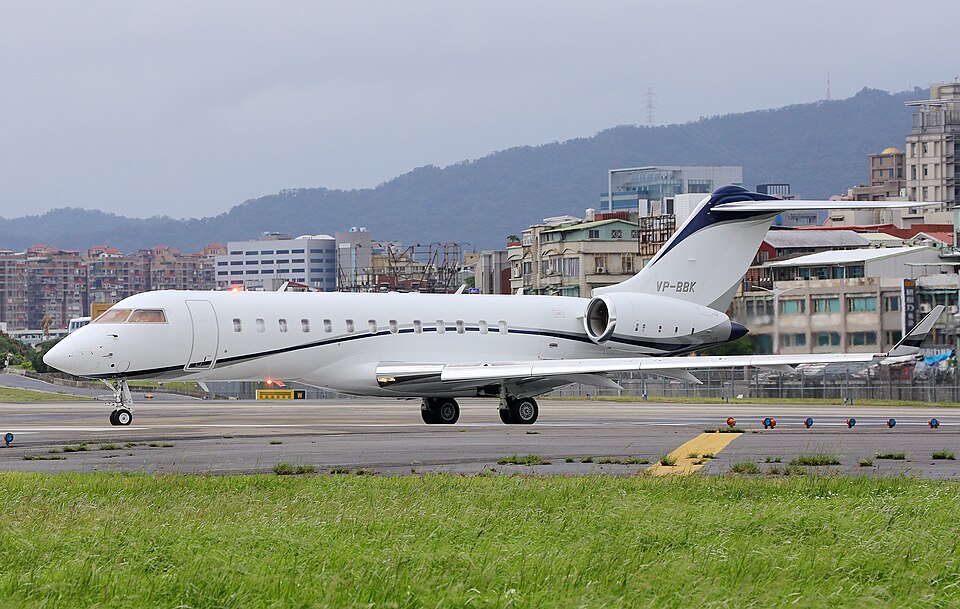
On 23 December 2000 at 1351 UTC, a Beech 200 King Air, registration VP-BBK, crashed into a factory complex approximately 1 nm north-east of Blackbushe Airport, Surrey, United Kingdom. The aircraft was operating a private flight from Blackbushe to Palma, Spain. The pilot and four passengers were on board. All occupants sustained fatal injuries, and the aircraft was destroyed. The factory was closed at the time of impact, and no ground casualties occurred.
History of the Flight
The pilot began planning the flight on the morning of the accident, obtaining weather information including aerodrome forecasts and reports. He contacted the Aerodrome Flight Information Service Officer (AFISO) at Blackbushe to request the current weather, which was reported as Runway Visual Range (RVR) 500 metres in fog. The pilot filed a flight plan for a departure time of 1200 hrs.
Upon arrival at the airfield at approximately 1100 hrs, the pilot requested and received permission to drive along Runway 26/08 to assess the visibility. Accompanied by an airfield fire vehicle, he noted that he could see four white runway centreline marks and considered the visibility acceptable for takeoff.
The aircraft was fuelled with 987 litres, filling the tanks. The departure was delayed multiple times, eventually set for 1325 hrs. Passengers boarded in the hangar, and the aircraft was towed to the hard standing. The pilot briefed a manager that during the takeoff roll he would visually maintain the runway centreline while a passenger called out airspeeds, a technique he had practised in a simulator.
After normal engine starts, the pilot was cleared to enter and backtrack Runway 08 at 1340 hrs. Low visibility procedures were in effect, with two fire vehicles positioned north of the runway. The AFISO issued a departure clearance and instructed a frequency change to Farnborough. The pilot acknowledged and commenced the takeoff roll, calling 'rolling' approximately 200 metres from the start.
Witnesses reported that the aircraft became airborne and was seen at an estimated height of 50 to 70 feet above the Runway 26 threshold. It then banked approximately 30° to the left and disappeared into the fog. Moments later, two bangs were heard. The AFISO attempted to contact the aircraft without success and initiated crash procedures. The airfield rescue and fire fighting service located the crash site within a factory complex, where a major fire had ensued.
Cockpit Voice Recorder and Spectral Analysis
The aircraft was equipped with a 30-minute solid-state cockpit voice recorder (CVR), which survived the impact and fire. The recording captured the flight from before engine start to the final impact.
During the takeoff roll, the pilot instructed the right‑seat occupant to call out airspeeds. After a normal power assurance check, the aircraft began its takeoff. At approximately 110 kt, about 20 seconds after brake release, a change in propeller noise was recorded. Airspeed calls continued through 115, 120, and 125 kt. A 6.5‑second delay followed, during which the pilot made two muted exclamations. Speeds of 130, 135, and 140 kt were then called, the last occurring five seconds before impact. Four seconds before impact, the stall warning sounded. In the final three seconds, engine and propeller sounds changed rapidly, first decreasing then increasing in pitch.
Spectral analysis of the CVR recordings allowed derivation of aircraft ground speed from tyre rotation frequencies. A reduction in one propeller’s rotational speed was detected as the aircraft rotated, which would have caused thrust asymmetry. The analysis could not distinguish between left and right propellers.
Engineering Examination
Examination of the remaining aircraft structure, much of which was consumed by fire, found no malfunction in the engines, propellers, or flight controls that would have affected the flight.
Probable Cause
The accident investigation synopsis stated: "Through a combination of lack of visual reference, confusion as to the cause of the power reduction and possible disorientation the pilot lost control of the aircraft and although he may have realised the situation seconds before impact with the ground there was insufficient height available to effect a safe recovery."