Accident Overview
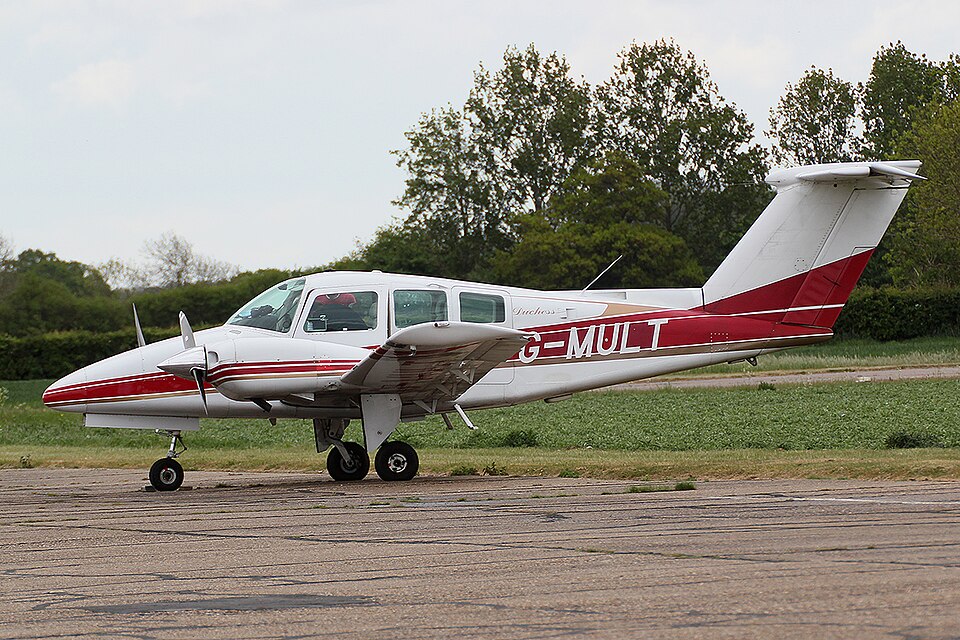
On 11 June 2009 at 1621 UTC, a Beech 76 Duchess (registration G-MULT) experienced a landing gear retraction during a touch-and-go landing at Bournemouth Airport. The aircraft was conducting a Multi-Engine Piston/Instrument Rating Revalidation Proficiency Check, a training flight. The commander held a Commercial Pilot's Licence and had 2,793 hours of flying experience, with approximately 1,165 hours on type. The flight had one crew member (the instructor) and one passenger (the student). No injuries were reported.
History of the Flight
The flight proceeded normally to a high standard until the visual circuits. The student flew an asymmetric circuit, and on final approach, the instructor checked for and confirmed three green landing gear indicator lights. After touchdown, the instructor raised the flaps and was centralising the trims when he became aware of the landing gear warning horn. He observed that the landing gear selector was in the up position. The student immediately lowered the selector, but not before the nose and right landing gears collapsed. The instructor noted the proximity of the student's knee to the landing gear selector and surmised that the student's knee had inadvertently knocked the selector.
Damage
The accident resulted in both propellers being bent and the engines being shock-loaded. Additionally, damage occurred to the right wing skin, lower fuselage, and right engine exhaust.
Previous Incident
The previous day, the same student had flown with a different instructor in the same aircraft. During the Before Starting Engine checks, that instructor noticed the landing gear selector was in the up position. The instructor asked the accident flight's instructor about this, but he was unaware of it. Apart from this, the student was reported to have flown to a good standard and was ready for the proficiency check.
Instructor's Observations
The instructor of the accident flight stated that, in his opinion, the accident was caused by the student inadvertently knocking the landing gear selector to the up position with his right knee during the touch-and-go. He believed there was nothing he could have done at the time to prevent it. He noted that checking the student's seating position before the flight might have prevented the accident, but this was not a routine practice. The instructor also commented that other aircraft in the operator's fleet have a metal guard below the landing gear selector to prevent such occurrences. The operator has since discussed fitting similar guards with their maintenance organization, but EASA may consider this a modification, complicating the process.