History of the Flight
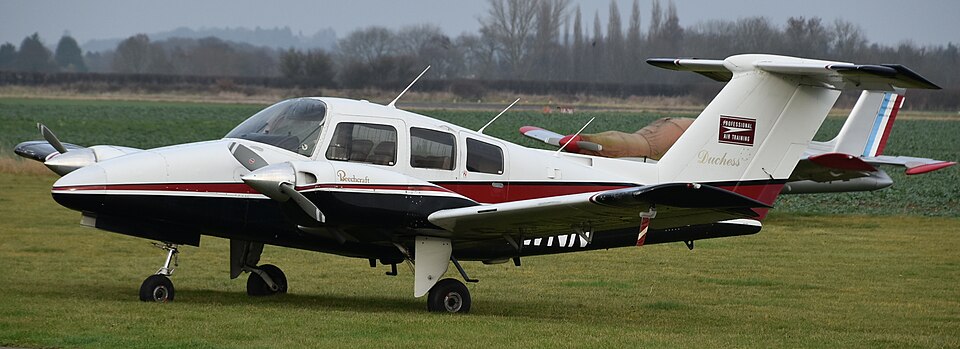
During a stalling exercise, the crew of G-TWNN lowered the landing gear but only two green ‘down and locked’ lights illuminated; the right main landing gear light did not. The ‘push to test’ feature confirmed the bulb was serviceable. The emergency gear extension system was then used, but the indication did not change, nor did vigorous maneuvering of the aircraft alter the indication. The commander, who had briefed his student to fly an ILS approach down to 500 ft before taking control, informed ATC of the problem. He flew past the control tower, where ATC personnel visually confirmed that the right main landing gear was not extended. ATC requested a delay to allow other aircraft to land, during which the crew reviewed the checklist for a wheels-up landing. After receiving clearance, the aircraft flew a normal approach. During the flare, both engines were shut down and propellers feathered. The aircraft touched down on the left main wheel, and the pilot held the right wing up as long as possible. The wing tip eventually contacted the ground, and the aircraft swung to the right before coming to rest at the side of the runway. The occupants were uninjured and exited without difficulty.
Subsequent Investigation
The landing gear on this aircraft type is operated by a hydraulic system powered by an electric motor. Disassembly of the right main landing gear oleo strut revealed internal corrosion that had inhibited movement of its internal piston. This prevented the strut from fully extending; following the previous takeoff, it was likely no more than three-quarters of its maximum length. Consequently, the wheel trailed aft of its normal weight-off-wheels position, causing it to foul the edge of the wheel-well. While gear retraction was not prevented, the mechanism ‘hung up’ during subsequent extension attempts. The oleo is maintained ‘on condition’, meaning it is not subject to periodic internal inspections. The maintenance organization stated they were unaware of any previous occurrences of this problem. Subsequently, the company introduced a maintenance action at the 150-hour inspection to check the range of travel of the oleo struts while the aircraft is jacked up.