Incident Overview
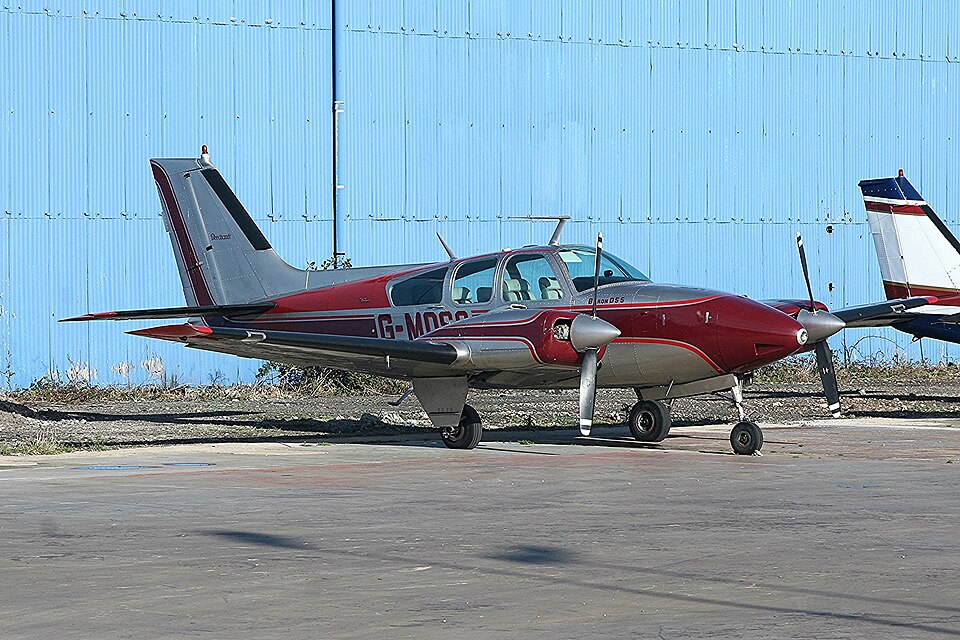
On 7 March 2000, a Beech D55 Baron, registration G-MOSS, was on a private flight from Guernsey to Elstree Aerodrome in Hertfordshire. The aircraft was being flown to undergo preparation for renewal of its Certificate of Airworthiness. The pilot, a 46-year-old UK and US Airline Transport Pilot with 6,500 total flying hours (750 on type), was the sole occupant.
Sequence of Events
While entering the circuit at Elstree, the pilot selected landing gear DOWN. He felt a 'thump' from beneath the front right seat. The landing gear indicator lights showed green for the left main and nose gears, and a red light for the right main gear. A reselection of the gear did not change the indication. Using the emergency landing gear selector resulted in three red lights. The pilot then returned to the normal DOWN selection, again seeing two green and one red light. After two flypasts of the control tower, during which the landing gear appeared to be down but could not be confirmed as locked, the pilot elected to land in that condition.
Landing and Damage
During touchdown, the pilot kept the weight on the left and nose gears as much as possible. Initially, the right main gear seemed to support the aircraft, but then it suddenly began to collapse. The pilot immediately moved the mixture levers to CUT-OFF and feathered both propellers. The aircraft came to a halt with minimal damage; the pilot exited normally. The damage was limited to the right propeller, engine cowl, flap, and aileron.
Maintenance Findings
The maintenance company repairing the aircraft discovered that the right main landing gear up-lock roller had seized. This seizure caused the gear actuating rod to bend when the up-lock released. As the gear neared its down position, the bent rod was too short to complete the extension cycle and engage the down-lock. The company reported that prior to the aircraft's prolonged grounding at Guernsey, most or all of the bushes and joints in all three landing gears had been renewed (not by the same company) but appeared not to have been lubricated. Consequently, many bushes and articulated joints had corroded, requiring drifting out for removal. After replacing the affected items and the bent actuating rod, the landing gear mechanism operated normally.