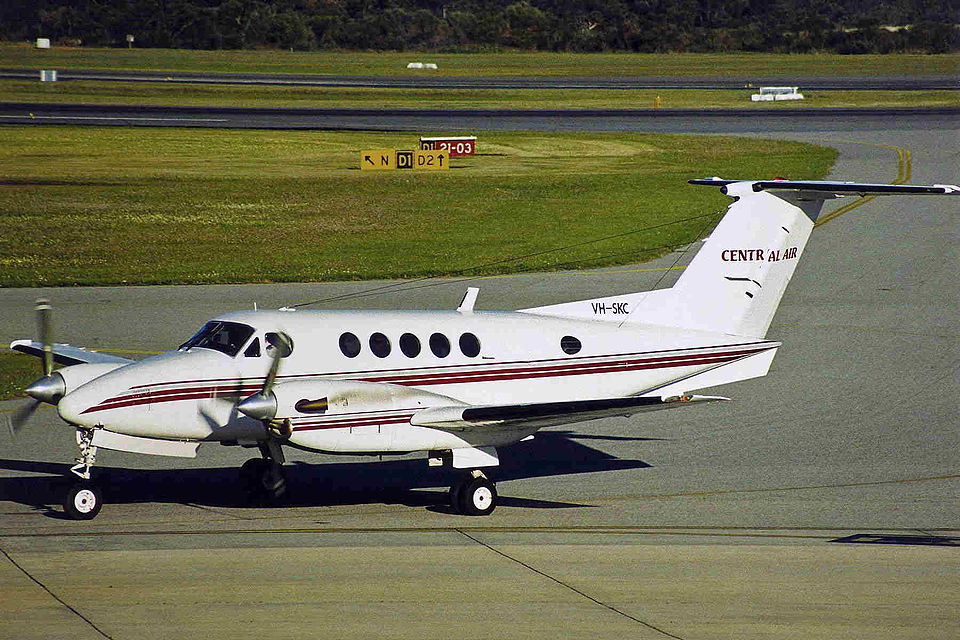
Incident
On 4 September 2000, a Beech Super King Air 200 aircraft, registered VH-SKC, departed Perth, Western Australia at 1009 UTC on a charter flight to Leonora. The aircraft carried one pilot and seven passengers.
Flight and Incapacitation
Until 1032 UTC, the operation of the aircraft and communications with the pilot appeared normal. Shortly after the aircraft climbed through its assigned altitude, the pilot's speech became significantly impaired, and he seemed unable to respond to air traffic services (ATS) instructions. Open microphone transmissions over the next eight minutes revealed the progressive deterioration of the pilot toward unconsciousness and the absence of any sounds of passenger activity in the aircraft. No human response of any kind was detected for the remainder of the flight.
Crash
Five hours after departure, the aircraft impacted the ground near Burketown, Queensland. The aircraft was destroyed, and there were no survivors.
Investigation
The official investigation determined that due to limited evidence, definitive conclusions regarding the factors leading to the incapacitation of the pilot and occupants could not be drawn. However, several findings were identified. The pilot held a valid license, had received required training, and there was no evidence suggesting he was not medically fit for the flight. Weather conditions on the day presented no hazard. The flight path was consistent with the autopilot controlling the aircraft in heading and pitch-hold modes with no human intervention after passing position DEBRA.
After the aircraft climbed above FL250, the pilot's speech and breathing patterns during radio transmissions displayed changes consistent with hypoxia. Testing ruled out carbon monoxide and hydrogen cyanide as significant factors. The low levels of these gases and the absence of airway irritation indicated a cabin fire was unlikely. The incapacitation of the pilot and passengers was probably due to hypobaric hypoxia because of the high cabin altitude and their not receiving supplemental oxygen. A rapid or explosive depressurization was unlikely. The reasons for the occupants not receiving supplemental oxygen could not be determined.
Findings
The investigation noted that a visual alert set to operate when cabin pressure altitude exceeds 10,000 ft, combined with an aural warning, may have prevented the accident. The training and actions of the air traffic controller were not factors. Significant factors included: the aircraft was probably unpressurized for a significant part of its climb and cruise for undetermined reasons; and the pilot and passengers were incapacitated, probably due to hypobaric hypoxia, because of the high cabin altitude and their not receiving supplemental oxygen.