Incident
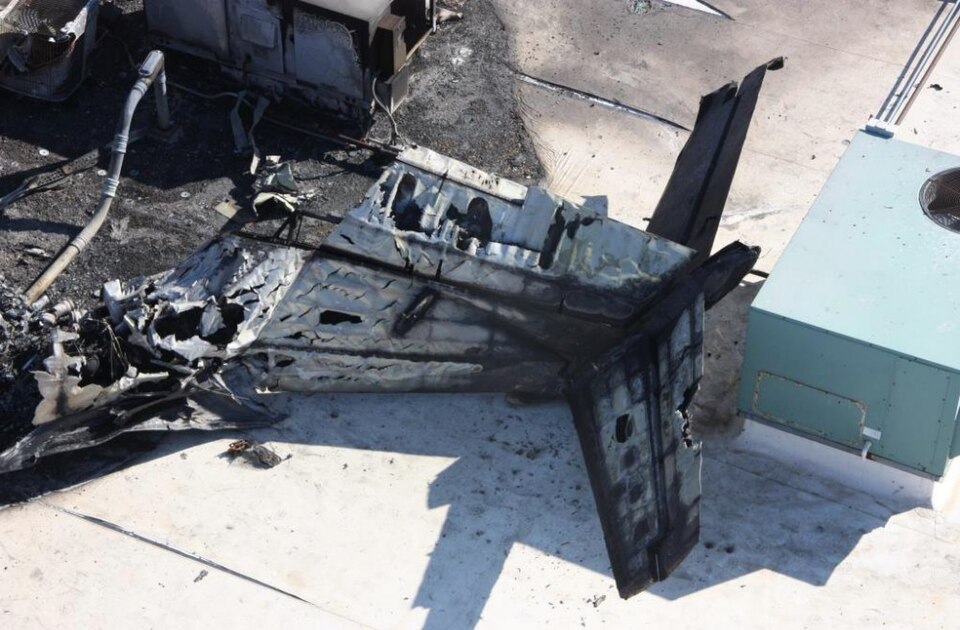
During a repositioning flight, an airline transport pilot declared an emergency shortly after takeoff, stating that the airplane "lost the left engine." The aircraft climbed to approximately 120 feet above ground level and was observed by witnesses in a left turn with the landing gear extended. It continued turning left and descended into a building located on the airfield. A postimpact fire ensued, consuming the majority of the airplane.
Investigation
Postaccident examinations of the airframe, engines, and propellers revealed no anomalies that would have precluded normal operation. Neither propeller was feathered before impact. Both engines exhibited multiple internal damage signatures consistent with operation at impact. Engine performance calculations, using preimpact propeller blade angles derived from witness marks on preload plates and sound spectrum analysis, indicated that the left engine was likely producing low to moderate power and the right engine was likely producing moderate to high power at the time of the building strike.
A sudden, uncommanded engine power loss without flameout can result from a fuel control unit failure or a loose compressor discharge pressure (P3) line; however, thermal damage prevented a full assessment of these components. Although the left engine was producing some power, the investigation could not rule out the possibility of a sudden left engine power loss consistent with the pilot's report.
A sideslip thrust and rudder study determined that, during the last second of flight, the airplane had a nose-left sideslip angle of 29°, suggesting that the pilot applied substantial left rudder input. The rudder boost system was destroyed, preventing determination of its operational status.
Findings
The investigation concluded that the pilot likely failed to maintain lateral control of the airplane after reporting a problem with the left engine. Evidence also indicated that the pilot did not follow emergency procedures for an engine failure during takeoff, which include retracting the landing gear and feathering the propeller.
The pilot had a history of anxiety and depression, treated with medication not reported to the Federal Aviation Administration. However, analysis of autopsy and medical records found no evidence that his medical conditions or medications contributed to his inability to safely control the airplane in an emergency.
Probable Cause
The probable cause of the accident was the pilot's failure to maintain lateral control of the airplane after a reduction in left engine power and his application of inappropriate rudder input. Contributing to the accident was the pilot's failure to follow the emergency procedures for an engine failure during takeoff. Also contributing was the left engine power reduction for reasons that could not be determined because a postaccident examination did not reveal any anomalies that would have precluded normal operation and thermal damage precluded a complete examination.