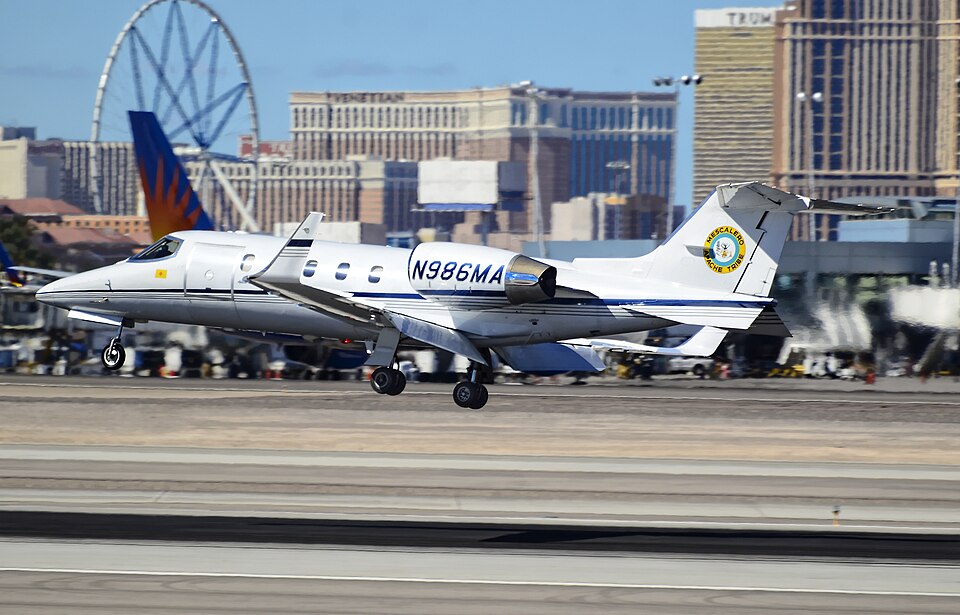
On October 24, 1971, a Beechcraft 99 Airliner (registration N986MA) operated by Monmouth Airlines was involved in an aviation accident near Allentown-Lehigh Valley (Bethlehem-Easton), United States of America during landing or approach. 4 people were killed. Investigators recorded the probable cause as: The pilot's nonadherence to approved approach procedures for executing a non precision instrument approach in instrument flight conditions. This summary draws on records from the Bureau of Aircraft Accidents Archives (B3A).
Monmouth Airlines Flight 98 crashed into Blue Mountain near Allentown during a VOR approach, killing four people and injuring four others. The official investigation attributed the accident to nonadherence to approach procedures and pilot fatigue.
Flight Details and Approach Sequence Monmouth Airlines Flight 98 departed Wilkes-Barre at 2253 local time for a short instrument flight rules (IFR) flight to Allentown. Allentown Approach Control cleared the flight for a VOR approach and instructed the pilot to report when the aircraft was 12 miles north of the Allentown VOR. At 2307 local time, after receiving the flight's position estimate, Allentown Approach Control cleared Monmouth 98 for a VOR approach to land on runway 06. The crew was requested to report when inbound over the Allentown VOR. ## Impact and Casualties The aircraft collided with the ridge of Blue Mountain at an elevation of 1,540 feet (470 m). The wreckage was located 11.3 miles north of Allentown-Bethlehem Easton Airport. Both pilots and two passengers were killed, while four other passengers were injured. The aircraft was destroyed. ## Official Findings The official investigation determined that the probable cause was the pilot's nonadherence to approved approach procedures for executing a non-precision instrument approach in instrument flight conditions. The Board further found a high degree of probability that extensive on-duty time and actual instrument flight time prior to the accident resulted in fatigue for both pilots, affecting their judgment and decisions during the approach.
A SkyWalk Join't 3 paraglider crashed into the ground near Las Vizcachas, Chile, on September 1, 2024. The pilot and passenger sustained serious spinal…
PARAPENTE (ULTRALIVIANO NO MOTORIZADO)·2024-09-01DGAC Chile
A Cessna 172N struck electrical cables while on final approach to land at Aucó Aerodrome in Chile. The pilot was uninjured, but the aircraft sustained damage…
A Bombardier DHC-8-402 suffered a tail strike during landing at Puerto Williams on September 9, 2024. All 76 occupants were unharmed, but the aircraft…
A MYD JS-MD 3 glider veered off the runway and struck a wall at Vitacura Aerodrome on January 6, 2025. The pilot was uninjured, but the aircraft sustained…
A recreational paraglider flight in Puchuncaví, Chile, ended with the pilot sustaining serious injuries after a rapid descent and impact with a hillside on…
PARAPENTE (ULTRALIVIANO NO MOTORIZADO)·2025-03-29DGAC Chile
A Tecnam P2006T landed on its belly at an aerodrome in Poland after the crew failed to confirm landing gear deployment. The incident resulted in no injuries…