Accident Sequence
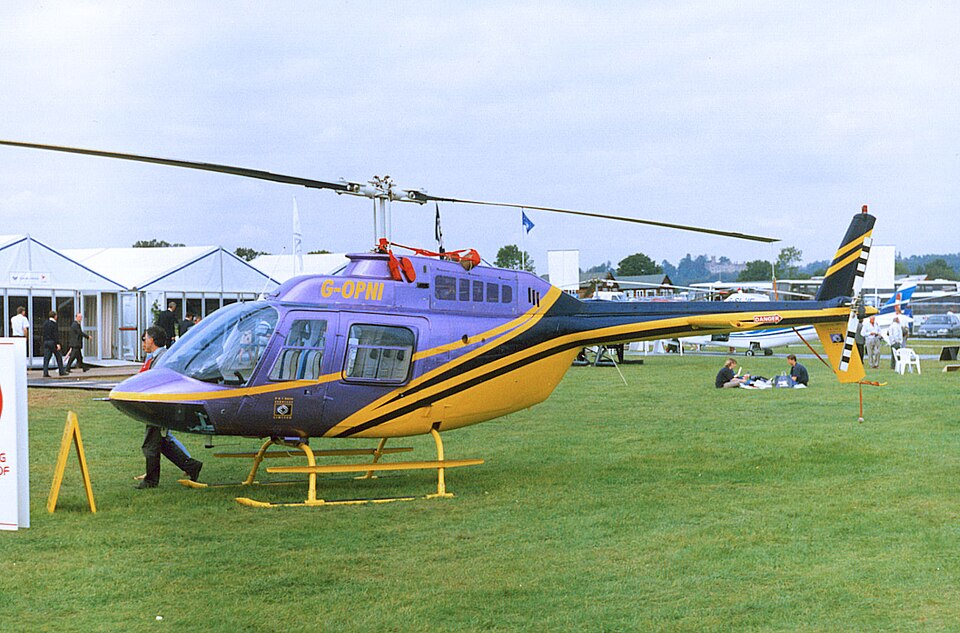
On 5 April 1999 at 1100 UTC, a Bell 206B helicopter, registration G-OPNI, departed a private site near Teignmouth, Devon, for Denham Airport, Middlesex. The pilot, holder of a Private Pilot's Licence (Helicopters) with 550 hours total experience (120 on type), intended to fly a direct track of 065° using GPS navigation and visual reference. A few minutes into the flight, the pilot contacted Exeter ATC, reporting his altitude at 500 feet and requesting a radar service. ATC advised they could only provide a flight information service as the helicopter was below their radar coverage.
The pilot stated he initially had good visibility but inadvertently flew into mist and became disorientated. Unable to find a way clear, he attempted to climb but lost control. He regained control between cloud layers, experiencing rates of climb and descent up to 2,000 ft/min while in cloud. He then called Exeter ATC, uncertain of his position. He advised he was not IMC rated but was flying between cloud layers. ATC provided a transponder code and offered a radar advisory service and headings to Exeter Airport for a surveillance radar approach. The pilot initially accepted a turn toward Exeter but decided descending through cloud was beyond his capability. He requested radar headings east, then to the coast for a descent over the sea.
The pilot was given a heading of 180° and later 100°, starting a descent when clear of the coast. He found he could not maintain a heading while descending on instruments and again lost control. The radar controller observed the helicopter deviating to 030° and turning back toward cliffs in Lyme Bay. He advised the pilot of the descent toward land but then lost radar and radio contact. The helicopter descended into the sea in a tail-low attitude, pitched forward, and rolled over. Both the pilot and passenger released their harnesses and escaped through side doors. The passenger climbed onto the inverted helicopter; the pilot also climbed aboard after some time in the water. Neither wore a lifejacket; both were dressed in lightweight clothing.
Post-Accident Events
Rescue services were alerted; the Lyme Regis lifeboat launched. The local police helicopter support unit could not assist due to weather. Witnesses reported thick fog in the area. A local fishing vessel recovered the pilot and passenger about one mile from shore, approximately 1 hour 20 minutes after the accident. The helicopter remained afloat during this period. Both persons were taken to hospital suffering from mild hypothermia. The helicopter was destroyed.
Weather and Pilot Background
The pilot had watched local television forecasts in preceding days but did not obtain a specific aviation forecast for the flight. The aviation forecast indicated isolated areas of fog and drizzle along the coast with an expected cloudbase of 300 feet. The pilot had received some dual instrument training using a hood, but stated it was insufficient for the unexpected IMC encounter. He had conducted only one flight in the previous three months. Witnesses along the route described the helicopter flying at 300 feet under cloudbase, then at "head height" over a caravan site field before pulling up into a steep climb. The land elevation at that site was 450 feet.
The helicopter, a Bell 206B manufactured in 1967, was powered by one Allison 250-C20 turboshaft engine. The flight was private with one crew and one passenger aboard. Both occupants sustained minor injuries.