History of the Flight
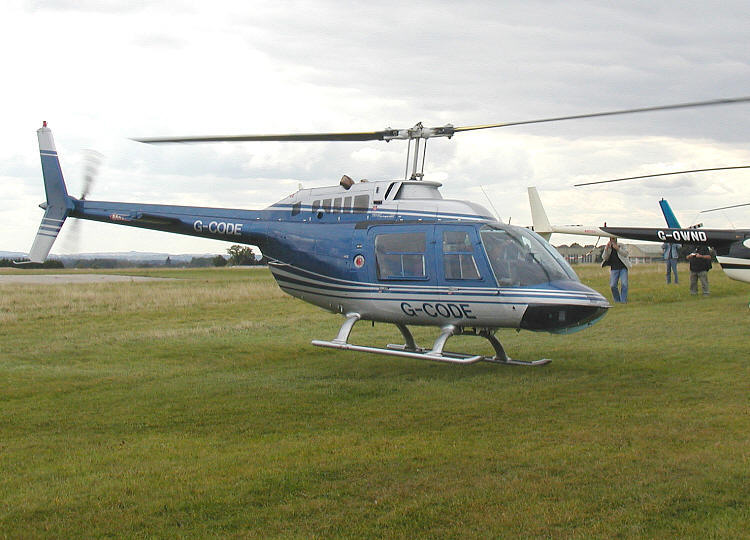
The helicopter, a Bell 206B Jet Ranger III (registration G-CODE), was on a private flight. The pilot reported that he had landed in a field approximately three hours earlier. After lifting into a hover into wind, he turned and hover-taxied downwind to use the full length of the field for takeoff. While carrying out a spot turn to the right to point back into the wind, the wind gusted, and he experienced a sudden loss of tail rotor effectiveness (LTE). The helicopter began to spin to the right. After about one and a half turns, before the pilot could recover control, one of the skids struck the ground, and G-CODE rolled onto its right side. The engine was still running after the impact; the pilot shut it down and made the helicopter safe.
Injuries and Damage
The pilot and his passenger exited the helicopter through the left windscreen, which the passenger had kicked out. The passenger sustained a cut on the top of his head (minor injury) and subsequently received treatment. The pilot was uninjured. The helicopter sustained damage to the main rotor blades, main gearbox, transmission, fuselage, tail boom, and engine. There was a fuel leak but no fire.
Weather Conditions
The weather at the time was fine. However, the surface wind at Manchester International Airport, approximately 10 miles away, was recorded as from 075° at 16 knots gusting to 27 knots. The aircraft flight manual advises that the helicopter has been demonstrated in sideways and rearwards flight up to certain wind speeds. The wind at the accident site likely exceeded those demonstrated maximum sideways and rearwards airspeeds.
Pilot's Comments
The pilot noted that he could have taken off from the position where he initially lifted into the hover. He also stated that, although he would normally have carried out the spot turn to the left, on this occasion he was keen to keep nearby power cables in sight while manoeuvring. Carrying out a spot turn to the right involved reducing the thrust produced by the tail rotor. The pilot concluded that performing the manoeuvre in wind conditions in excess of the maximum speeds for which the Jet Ranger has been demonstrated in sideways and rearwards flight contributed to the accident.