History of the Flight
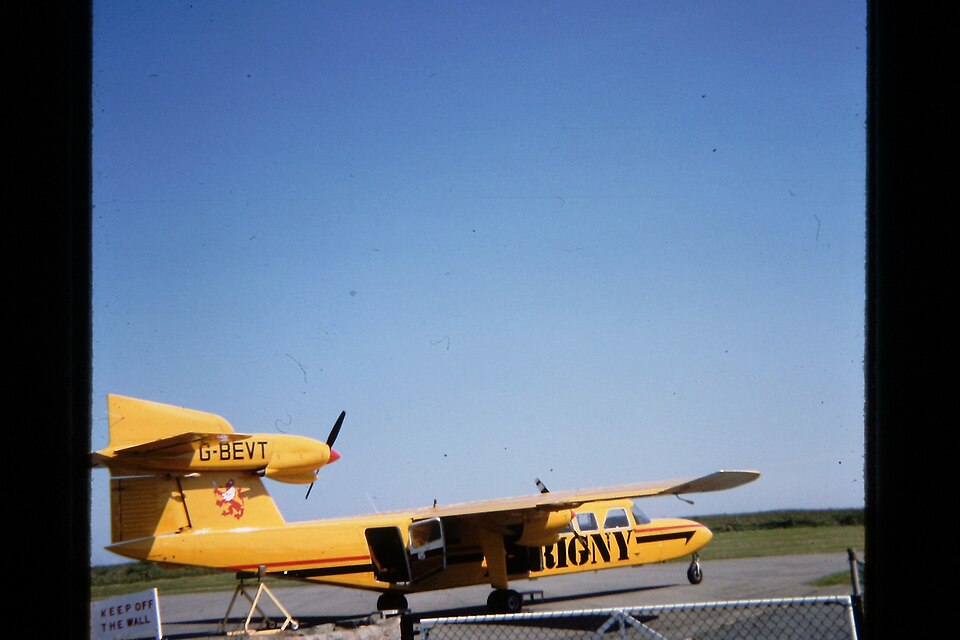
On 8 June 1998 at 1035 UTC, a Britten-Norman BN2A Mk.III-2 Trislander, registration G-BEVT, was operating a scheduled passenger service from Jersey to Guernsey. The aircraft had 1 crew and 16 passengers on board. The commander, a 55-year-old commercial pilot with 2,043 hours total flying experience (50 on type), was conducting his fifth sector that day.
The aircraft was refuelled with 90 litres of fuel, bringing the total on board to 80 gallons (261 kg). During boarding, a loading error resulted in the aircraft departing the ramp 23 kg above the Maximum Take Off Weight (MTOW) of 4,763 kg. Takeoff from Runway 27 at Jersey was uneventful. After takeoff, the pilot performed the after-takeoff checks between 100 and 200 feet above aerodrome level, including retracting flaps and switching off electric auxiliary fuel pumps.
At that moment, the pilot observed that the left engine had failed. He feathered the propeller on that engine and increased the remaining two engines to maximum power. The aircraft's pitch was adjusted to maintain 80 kt, the recommended speed after engine shutdown. Unable to climb, the pilot elected to land on a beach ahead.
Landing and Evacuation
The pilot turned left into wind and informed ATC of his intentions. He briefed the passengers. On touchdown, the remaining two engines were shut down and propellers feathered. The ground run was approximately 300 metres. All passengers evacuated through normal exits. ATC was advised, and shutdown checks were completed. The beach was 2 km long and 400 to 600 metres wide at low water. The surface was generally firm and smooth with occasional rock outcrops.
Aircraft and Performance
The aircraft's MTOW had been increased from 4,536 kg to 4,763 kg two years earlier, authorised by the CAA. At the incident weight and conditions, the manufacturer's performance graphs indicated a climb rate of 140-160 ft/min. Post-incident tests on the actual aircraft achieved 120 ft/min. The aircraft was not damaged and was flown off the beach later that day after inspection and ground runs. On the recovery flight, some fuel pressure fluctuations were observed when electric fuel pumps were switched off. Subsequent engineering replacements of the engine-driven fuel pump, carburettor, fuel pressure gauge, and transmitter found no definite fault, and the aircraft returned to service with no further faults reported.
Pilot Experience and Training
The commander had recently joined the company, completing training less than one month before the incident. Previously employed as a flying instructor at Jersey Airport, his training on the Trislander included simulated engine failures but not at maximum takeoff weights. The operator later revised training procedures to include engine failure practice at realistic operational weights using ballast. The after-takeoff procedure was amended to keep electric fuel pumps on until 900 feet.
Aftermath
The Airport Fire Service received the alarm at 1032 hrs and reached the aircraft at 1038 hrs, finding all occupants safe. The loading error was caused by an arithmetic mistake by the handling agent but was too small to affect performance. The operator subsequently reviewed loading procedures, providing handheld computers with weight and balance programs for each aircraft commander.