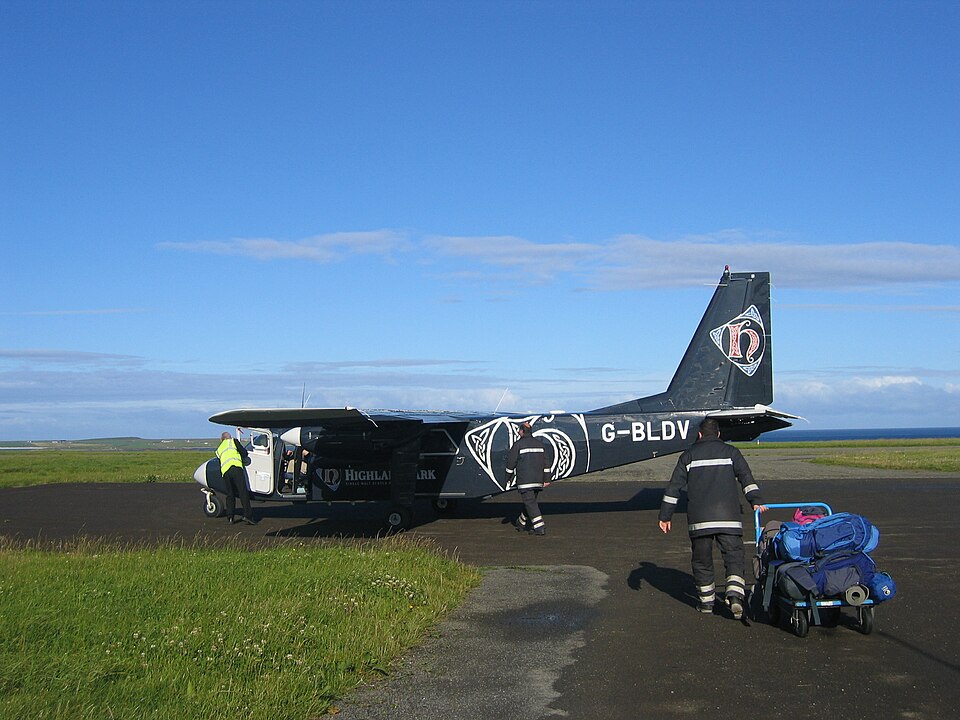
Incident Overview
On 3 June 1999 at 1315 UTC, a BN2B-26 Islander (registration G-BLDV) operated by a public transport carrier was departing from North Ronaldsay in the Orkney Islands. The commander, an Airline Transport Pilot with 13,000 flying hours (8,800 on type), selected full power for takeoff. Shortly after, the aircraft yawed to the right and the right engine RPM decreased. The takeoff was abandoned, and the engine was shut down. All eight occupants (one crew, seven passengers) were uninjured. Examination revealed that the No. 3 cylinder—the middle cylinder on the right side—had detached from the engine. The piston crown remained inside the cylinder, but the gudgeon pin lugs and piston skirt had fragmented.
Investigation Findings
The engine, cylinder, and recovered metallic debris from the engine bay and grass airfield were sent to the overhaul agency that had serviced the engine approximately 220 operating hours before the incident. The components were examined by the Air Accidents Investigation Branch (AAIB), with metallurgical analysis performed on the right crankcase half, the cylinder, connecting rod, and piston fragments.
All eight cylinder attachment studs, including two through-bolts joining the crankcase halves, had failed in high-cycle tension fatigue. The lower rear stud exhibited the least overload on its fracture face and was likely the first to fail. The lower pair of studs had been plastically deformed downward when the cylinder separated. The gudgeon pin lugs failed in a very low-cycle (fewer than ten) fatigue mechanism, probably because the piston partially jammed in the bore as the cylinder detached, overloading the connecting rod and lugs.
Two cylinder hold-down nuts, along with detached stud portions, were recovered. Fracture matching identified the probable initial stud failure and the one immediately above. The nuts showed undamaged cadmium plating on their thrust faces, indicating they had not been torque-tightened onto the cylinder flanges; even the chromate passivation film was intact. In contrast, similar nuts from another Lycoming engine showed circular smearing of the cadmium from torquing. Additionally, grey paint had been applied to the engine after assembly; paint had migrated under at least five of the nuts onto the cylinder flange seats, suggesting the nuts were loose when the paint was applied. Metallurgical examination found no evidence of corrosion or material defects contributing to the failures.
Maintenance and Inspection Context
The overhaul organization's final clearance inspection required a duplicate check of accessible cylinder hold-down nuts, with all nuts to be examined if any was loose. Records indicated this was done, but the physical evidence of undamaged nut faces contradicted that. The engine had received no maintenance since overhaul except routine oil and filter changes; no oil leaks were observed from the No. 3 cylinder prior to the failure.
Previous Occurrences
The operator had experienced two broken studs in 1995, each a single stud (not a through-bolt) on a front cylinder from engines with over 2,400 hours; all remaining nuts were correctly torqued. Those failures originated from corrosion in the stud threads, attributed to operation in a salt-laden atmosphere. Between February and June 1999, three further single stud or through-bolt failures occurred on No. 1 cylinders of engines with more than 1,300 hours. Again, no loss of torque on the remaining nuts and no oil leaks preceded failure. Investigation into these cases was ongoing. Since 1995, the operator had specified new studs and through-bolts on all overhauled engines.