Incident
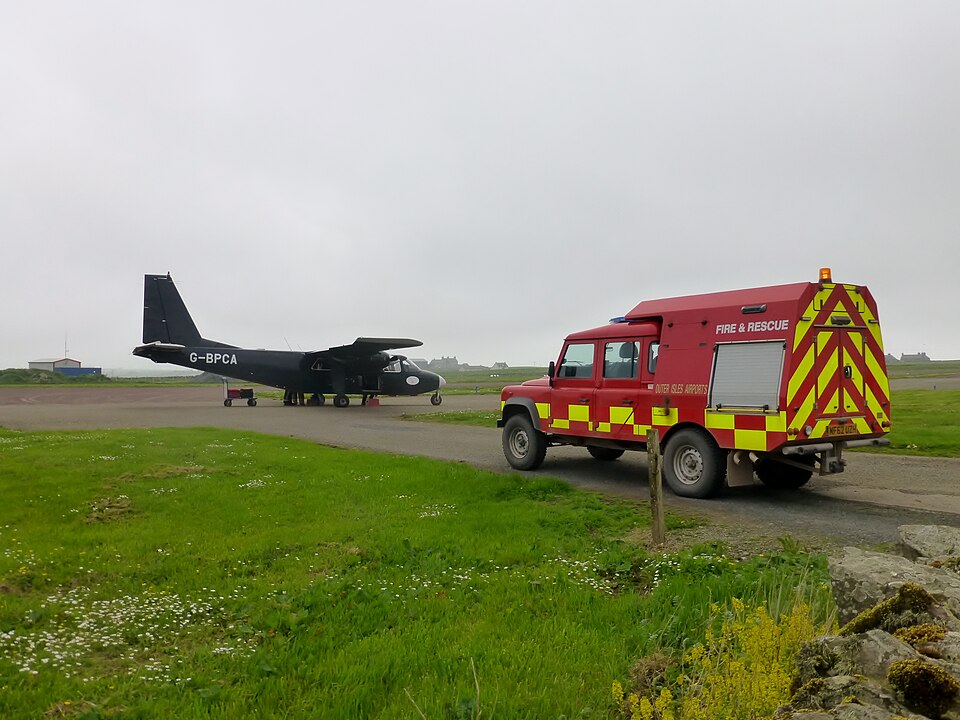
The aircraft, a BN2B-26 Islander registered G-BPCA, was conducting a commercial passenger flight from Papa Westray to Kirkwall. While on approach to Runway 14, the aircraft encountered a snow shower which reduced visibility to less than 100 m. The commander continued the landing, believing the aircraft was over the runway. After landing, the aerodrome controller informed him that he had not landed on the runway but approximately 20 m to the side. There were no injuries to the three passengers or the pilot, and no damage to the aircraft or aerodrome.
Weather and Approach
The aerodrome was closed for snow clearing, but an agreement allowed the operator's aircraft to land during snow-clearing periods. The commander chose Runway 14, which had 7-10 mm of snow contamination, within operator limits. En route, visibility was 10 km with isolated snow showers. As the aircraft approached, ATC reported visibility 1,600 m in snow showers, later reducing to 900 m (IRVR from Runway 09/27). On final approach, about 350 m from the threshold, the commander saw a heavy snow shower at the southern aerodrome boundary developing northwards. He judged he would land before it affected the runway. However, over the threshold, the aircraft was suddenly enveloped in a snow shower, with visibility less than 100 m.
Commander's Actions
Before initiating a go-around, visibility improved, and the commander saw the aerodrome covered in fresh snow. He held the aircraft in the flare while considering options. Ahead was a very black cloud down to ground level. Another aircraft was holding above at 2,600 ft. The commander assessed that a go-around would involve flying through snow and ice associated with cumulonimbus cloud, holding overhead, and possibly diverting with minimum reserve fuel. He saw tyre tracks he believed were from a runway inspection vehicle, which gave the impression he was over the runway. He completed the landing without incident.
Aftermath
The aerodrome controller observed the landing and informed the commander he had not landed on the runway. An inspection found the aircraft had touched down approximately 20 m from the runway pavement. The commander noted that blue runway edge markers were rendered invisible by snow covering their sides. Following the incident, the operator suspended the agreement to land during snow clearing and clarified instructions to pilots, requiring instrument approaches if reported visibility is less than 3,000 m.