Accident Overview
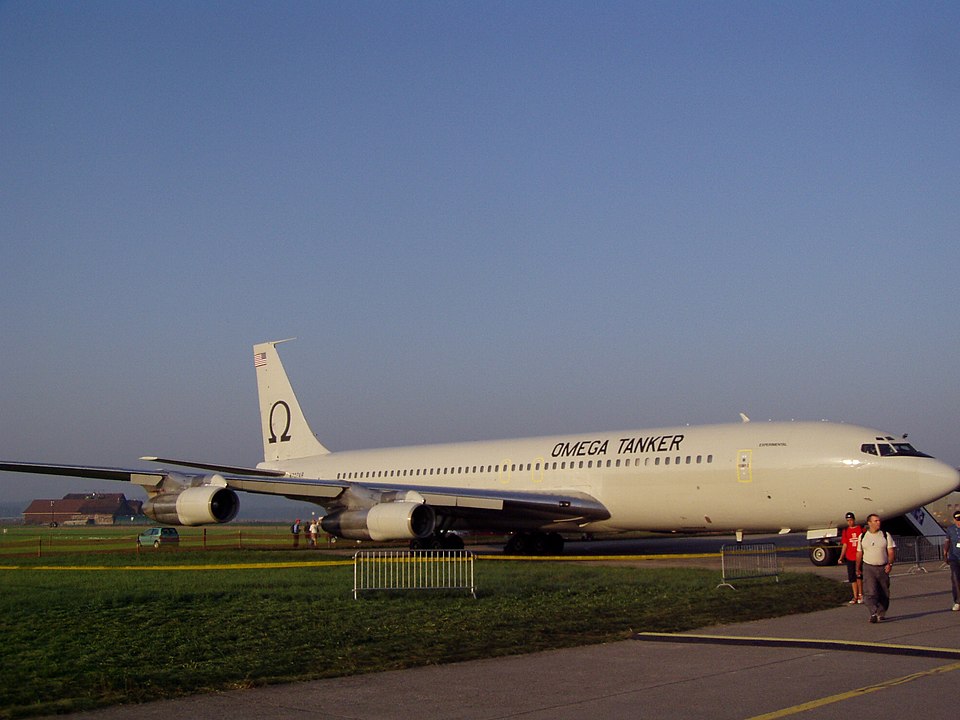
On May 18, 2011, at about 1727 Pacific daylight time, a modified Boeing 707, registration N707AR, operating as Omega Aerial Refueling Services (Omega) Flight 70, crashed on takeoff from Runway 21 at Point Mugu Naval Air Station, California (KNTD). The aircraft collided with a marsh area left of the departure end of the runway and was substantially damaged by post-impact fire. The three flight crewmembers—a captain, first officer, and flight engineer—sustained minor injuries.
Flight Background
The flight was conducted under a contract between Omega and the US Naval Air Systems Command (NAVAIR) to provide aerial refueling of Navy F/A-18s in offshore warning area airspace. According to the FAA, Omega, and the US Navy, the airplane operated as a nonmilitary public aircraft under 49 United States Code Sections 40102 and 40125. The crew had flown together many times previously.
Preflight and Takeoff
The crew reported a normal preflight inspection. During taxi, the wind was reported from 280° magnetic at 24 knots, gusting to 34 knots; the crew noted little change in direction and slight gust. They calculated a V1 of 141 knots and Vr of 147 knots, adding 5 knots to Vr for gusts, and briefed a maximum power takeoff. The first officer (pilot monitoring) advised the captain (pilot flying) to advance power smoothly to avoid compressor stall in the crosswind; the captain agreed.
At about 1723, air traffic control cleared the flight for takeoff from Runway 21 with instructions to turn left to heading 160° after departure. The captain applied takeoff thrust; the first officer applied forward yoke pressure and right aileron for the right crosswind. The takeoff roll was normal. At rotation speed, the captain rotated to an initial target pitch attitude of 11° nose up.
Engine Separation and Descent
Shortly after liftoff, about 20 feet above the runway and 7,000 feet down the runway, all three crew heard a loud noise and saw the thrust lever for the No. 2 (left inboard) engine rapidly retard to the aft limit. The captain applied full right rudder and near full right aileron to maintain directional control and level the wings, but the airplane continued drifting left. Believing the airplane would not continue climbing, the captain decided to put it back down.
Witnesses and a cell phone video from another Omega 707 crewmember showed the No. 2 engine separated and traveled above the left wing as the airplane passed abeam Taxiway A2. The inlet cowling for the No. 1 (left outboard) engine separated immediately after, consistent with being struck by the No. 2 engine nacelle. The airplane descended with the remaining three engines at maximum power; Pratt & Whitney indicated that loss of the No. 1 engine inlet cowling increased drag, effectively yielding less than zero thrust.
The captain lowered the nose and leveled the wings just before touchdown on the runway between Taxiways A2 and A1. The airplane made multiple contacts with the runway before drifting left and departing the runway surface before reaching Taxiway A1. It crossed Taxiway A and came to rest in the marsh area.
Evacuation
The crew observed flames in the cabin and did not have time to perform an engine shutdown or evacuation checklist. They had difficulty exiting the cockpit due to mud and debris blocking the door. All three successfully evacuated through the left forward entrance via the escape slide.
Probable Cause
The NTSB determined that the probable cause of this accident was the failure of a midspar fitting, which was susceptible to fatigue cracking and should have been replaced with a newer, more fatigue-resistant version as required by an airworthiness directive. Also causal was an erroneous maintenance entry made by a previous aircraft owner, which incorrectly reflected that the newer fitting had been installed.