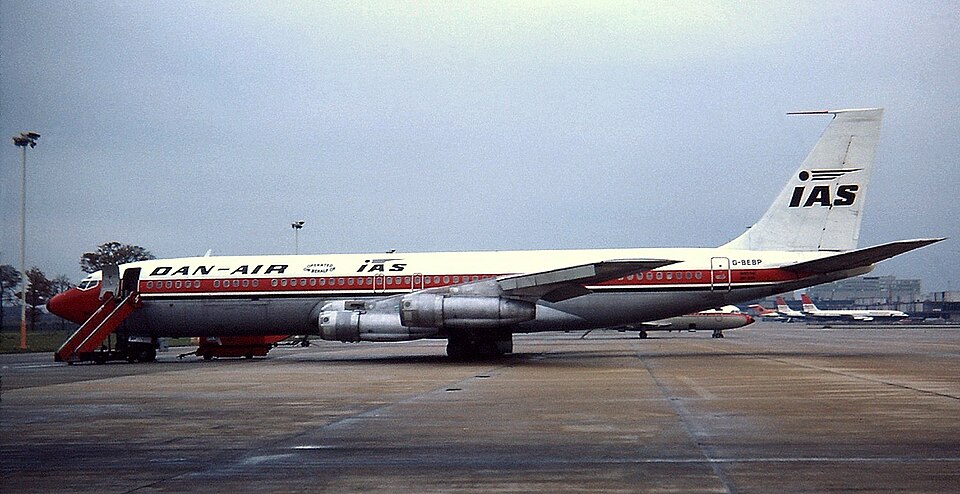
Incident Overview
On the final leg of a cargo flight from London to Lusaka, with intermediate stops in Athens and Nairobi, the aircraft was conducting a visual approach to runway 10 at Lusaka. The flight from Nairobi had been uneventful. After receiving clearance to descend to FL70 in 1,000-foot steps, the copilot reported the airfield in sight at 09:28. Lusaka control then cleared the aircraft to descend to 6,000 feet (2,221 feet above runway elevation) and shortly thereafter authorized a visual approach for runway 10. At 09:32, flaps were selected to 50°.
Inflight Separation
At 09:33, the complete right-hand horizontal stabilizer and elevator assembly was observed to separate from the aircraft in flight. Immediately, the aircraft pitched rapidly nose-down and dived vertically into the ground from a height of approximately 800 feet. The main wreckage was located 3,660 meters from the runway threshold. The aircraft was totally destroyed, and all six occupants were killed.
Investigation Findings
The official investigation determined that the accident was caused by a loss of pitch control following the in-flight separation of the right-hand horizontal stabilizer and elevator. This separation resulted from a combination of metal fatigue and inadequate failsafe design in the rear spar structure. Additionally, shortcomings in design assessment, certification, and inspection procedures were identified as contributory factors.