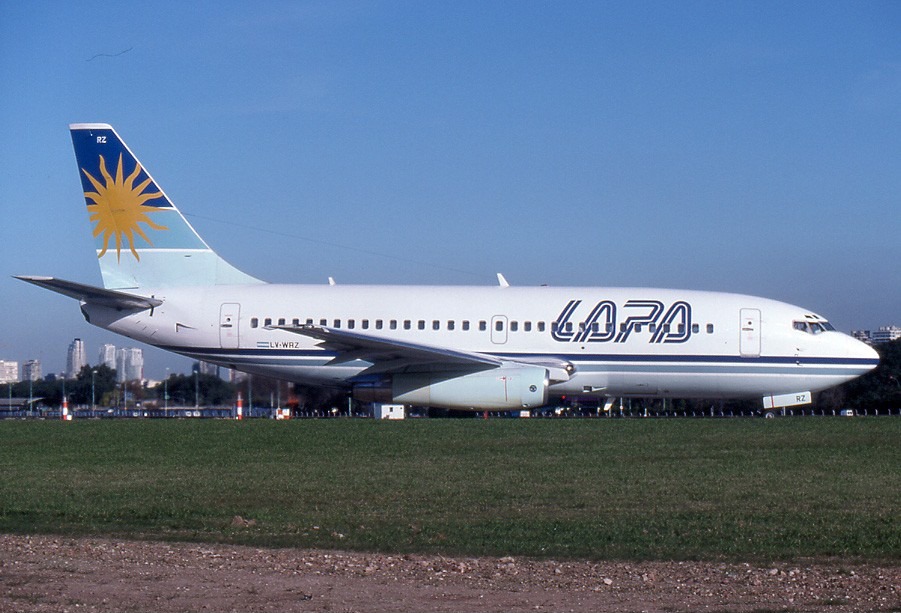
Background
LAPA Flight 3142 was a scheduled passenger flight from Buenos Aires-Jorge Newbery Airport to Córdoba, Argentina. The aircraft was a Boeing 737-200.
Pre-flight Events
The first officer and cabin crew arrived at the aircraft before the captain. The first officer instructed a mechanic that the total fuel requirement was 8,500 kg, to be stored in the wing tanks. The mechanic observed residual fuel in the central tank and began transferring it to the wing tanks. Upon boarding, the captain threw his paperwork on the ground, exhibited annoyance, and later shut off the fuel transfer.
During their initial time onboard, the captain, co-pilot, and purser engaged in lighthearted conversation about personal matters. After the purser left, the discussion shifted to the captain's family problems. The captain stated he was "going through bad times," and the co-pilot replied that he was also having a bad day. While conversing, the crew attempted to complete checklists, but their attention was divided, leading to the omission of selecting the flaps to the appropriate takeoff position.
Taxi and Takeoff
The distracting situation continued during pushback, engine start, and taxi. The takeoff was delayed by other aircraft and heavy arriving traffic. During the wait, the crew members smoked in the cockpit and continued their conversation.
Takeoff on Runway 13 commenced at 20:53. During the takeoff roll, the takeoff warning system activated because the flaps had not been extended. The crew disregarded the warning and continued. After reaching Vr, the pilot attempted to rotate. The stick shaker activated as the aircraft entered a stall. The aircraft sequentially struck the ILS antenna, the perimeter fence, a bus shelter, two automobiles, two excavators, and an embankment, where it came to rest. A fire erupted.
Casualties
Three flight crew members, 60 passengers, and two individuals in an automobile were killed.
Probable Cause
The Junta de Investigaciones de Accidentes de Aviación Civil (JIAAC) determined that the immediate cause of the accident was the flight crew's failure to extend the flaps for takeoff and their dismissal of the alarm warning about the lack of configuration. Contributing factors included a lack of crew discipline in not aborting the takeoff, excessive non-pertinent conversation in the cockpit, personal problems affecting pilot performance, and deficiencies in the psychological screening system.