Background
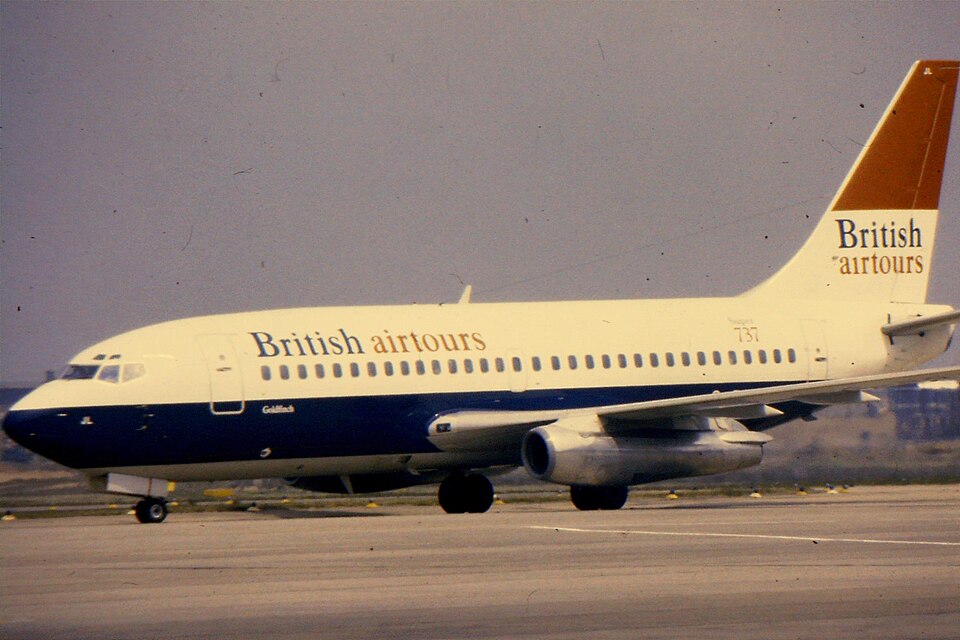
British Airtours Flight 328 (also designated flight 28M) was a charter flight scheduled from Manchester to Corfu. At 06:08, the crew received clearance to taxi to runway 24. By 06:12, the aircraft had lined up on the runway and was cleared for takeoff. The co-pilot was designated to perform the takeoff.
Takeoff and Abort
During the takeoff roll, the captain made the routine 'eighty knots' call. Twelve seconds later, a 'thump' or 'thud' was heard. The captain immediately ordered 'stop', closed the throttles, and selected reverse thrust. The maximum speed attained was 126 knots indicated airspeed (IAS). The captain initially believed a tyre burst or bird strike had occurred. The co-pilot applied maximum wheel braking, but the captain cautioned, 'Don't hammer the brakes, don't hammer the brakes', due to the possible tyre burst. At 45 seconds after the start of the takeoff run, 9 seconds after the 'thud', as the aircraft decelerated through 85 knots, the captain radioed air traffic control (ATC) that they were abandoning the takeoff. The fire bell rang simultaneously, and the captain added, 'it looks as though we've got a fire on number 1' as he cancelled reverse thrust. ATC confirmed, 'right there's a lot of fire, they're on their way now.'
Fire and Evacuation
At 25 seconds after the 'thud' (20 seconds before the aircraft stopped), the crew decided to evacuate via the starboard side. The aircraft was decelerating through 36 knots at that point, and the captain warned the cabin crew of the evacuation six seconds later. After the aircraft came to a halt, the crew executed the No. 1 engine fire drill, shut down the No. 2 engine, and began the passenger evacuation drill. Before completing the drill, the captain observed fuel and fire spreading forward on the left side of the aircraft. Both flight crew members escaped through the sliding window on the right side.
Immediately after the 'thud', an intense fire developed on the left-hand side of the aircraft, causing some cracking and melting of windows and associated smoke in the aft cabin. This prompted some passengers to stand up in alarm and move into the aisle. After the aircraft stopped, the purser attempted to open the right front door (R1), but the escape slide container jammed on the doorframe, preventing further movement. He then crossed to the L1 door and opened it, 25 seconds after the aircraft had stopped. The purser returned to the R1 door, cleared the obstruction, and opened it 85 seconds after the aircraft had stopped. Meanwhile, passengers had managed to open the right-hand overwing exit. The R2 (right rear) door was also opened, but no one escaped through that exit. In total, 17 surviving passengers exited through the L1 door, 34 through R1, and 27 through the overwing exit.
Probable Cause
The official probable cause of the accident was an uncontained failure of the left engine, initiated by a failure of the No. 9 combustor can which had been the subject of a repair. A section of the combustor can, ejected forcibly from the engine, struck and fractured an underwing fuel tank access panel. The resulting fire developed catastrophically, primarily due to the adverse orientation of the parked aircraft relative to the wind, even though the wind was light. Major contributory factors were the vulnerability of the wing tank access panels to impact, a lack of any effective provision for fighting major fires inside the aircraft cabin, the vulnerability of the aircraft hull to external fire, and the extremely toxic nature of the emissions from the burning interior materials. The major cause of the fatalities was rapid incapacitation due to inhalation of the dense toxic/irritant smoke atmosphere within the cabin, aggravated by evacuation delays caused by a forward right door malfunction and restricted access to the exits.