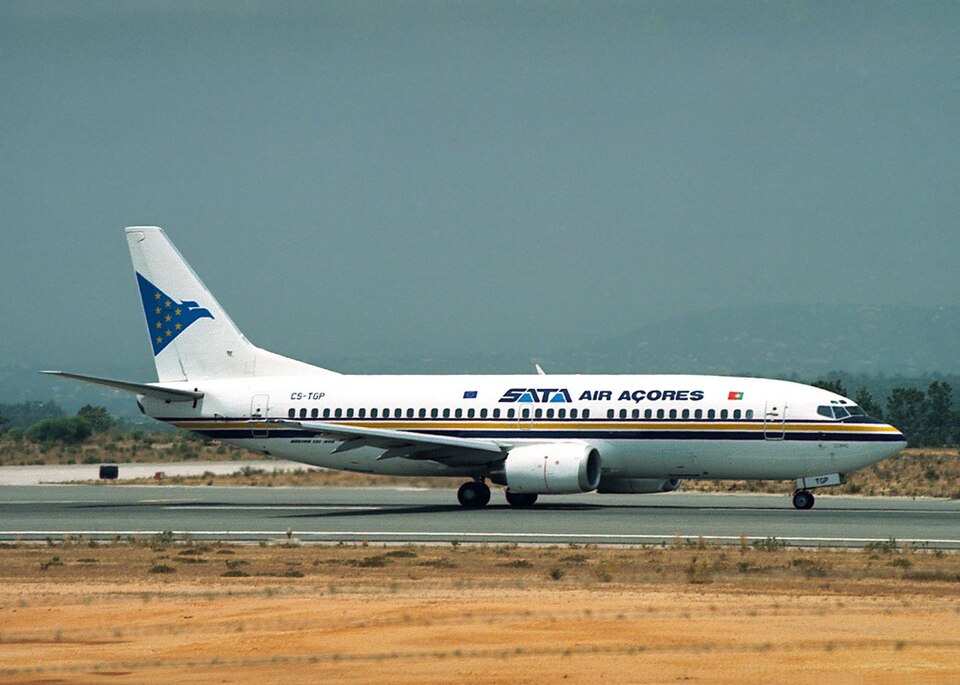
Incident Overview
On 10 August 2004, a Boeing 737-300, registration CS-TGP, was preparing for a public transport passenger flight from Jersey Airport to Funchal Airport in the Madeira Islands. The aircraft was powered by two CFM56-3/B2 turbofan engines. The crew consisted of 6 individuals and there were 152 passengers on board. No injuries were reported and no damage occurred to the aircraft.
Pre-Departure Planning
Prior to departure, the commander coordinated with the load controller, providing a Regulated Take-Off Weight (RTOW) of 57,600 kg, which was restricted by 'Field Length Requirement'. With a planned take-off fuel load of 11,000 kg, it was necessary to remove 15 bags to bring the weight within limits. The final load sheet indicated an actual take-off weight of 57,591 kg.
Takeoff and Subsequent Observations
After a takeoff that the flight crew considered uneventful, ground personnel at Jersey Airport reported that the aircraft appeared to use almost all the runway. The ATC assistant on duty believed that the aircraft rotated very late and used most of the runway, though the controller stated the takeoff did not cause concern. The AAIB investigated the differing views and obtained documentation from the operating company.
Performance Calculation Discrepancies
Runway 27 was in use. The 1020 hrs METAR reported a surface wind of 190°/10 kt, visibility greater than 10 km, few clouds at 1,500 ft amsl, temperature of 21°C, and QNH 1009 mb. The company take-off card used by the crew showed minor differences: wind 180°/07 kt, temperature 20°C, and QNH 1008 mb. The crew extracted the RTOW of 57,600 kg from the Jersey Runway 27 Flap 15 'Bleeds Automatic' performance sheet, which was based on 20°C and a headwind component of 10 kt, without accounting for QNH. The AAIB calculated that using the company card figures and a zero headwind resulted in a RTOW of 56,184 kg. The crew later stated the take-off fuel was 10,600 kg, leading to a take-off weight of 57,191 kg against the correct RTOW of 56,184 kg.
Incorrect Takeoff Speeds
The crew then consulted the Quick Reference Handbook (QRH) for takeoff speeds. They recorded V1 as 138 kt, Vr as 142 kt, and V2 as 150 kt. However, these figures were taken from the Flap 5 configuration; the correct speeds for Flap 15 were approximately 10 kt lower. As a result, the aircraft was 993 kg heavier than the RTOW and the crew initiated rotation later than required.
Company Response and Subsequent Actions
Following the incident, the company re-emphasized to all flight crew the importance of accurate take-off performance calculations in accordance with JAROPS 1 and the company Operations Manual. The importance of independent checks by both flight crew was highlighted, and crews were reminded to use refueling stops when required, particularly on critical sectors such as Jersey to Funchal. A subsequent ramp inspection on the same operator and aircraft type before another Jersey to Funchal flight revealed loadsheet discrepancies, requiring approximately 26 bags (around 500 kg) to be offloaded. The airport authorities at Jersey wrote to the operator expressing concern and advising that they would monitor future operations.