History of Flight
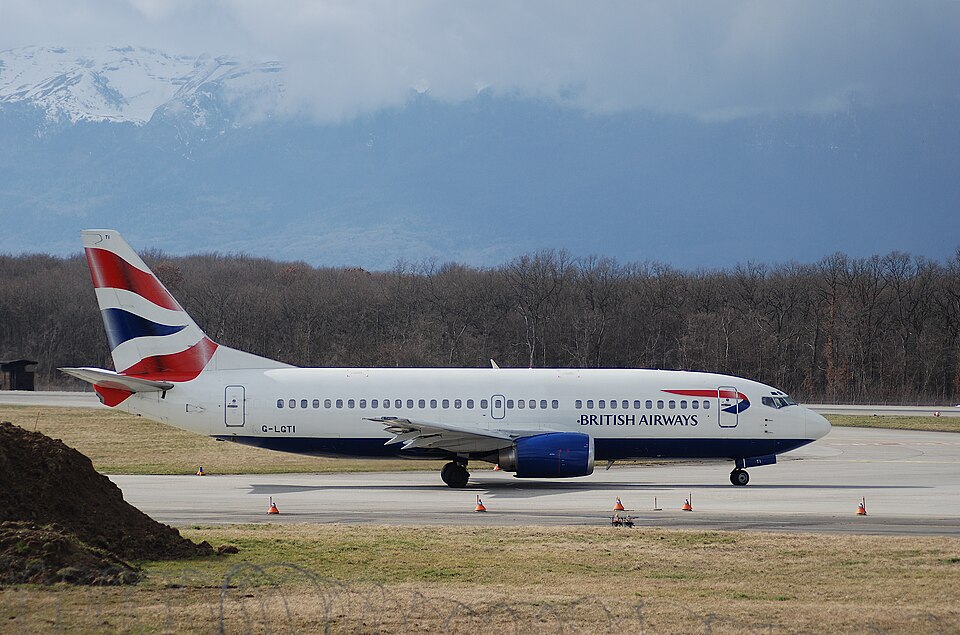
The flight crew boarded the aircraft at 0500 UTC on 30 July 2003 to prepare for a scheduled passenger flight to London Gatwick. The Auxiliary Power Unit was running, and external ground power was connected. During pre-flight checks, the crew observed that both ground service circuit breakers were out. A company engineer attempted to reset them, but they would not reset; the ground power tripped, and two additional circuit breakers popped. The crew then left the engineer to troubleshoot.
The commander briefly went to the terminal to inform passengers of the delay. Upon returning, the engineer reported further popped circuit breakers. Shortly after, the commander smelled electrical burning and saw increasing smoke on the flight deck. He instructed the engineer to shut down the aircraft and ordered an evacuation.
Outside, smoke was visible from the forward electronic bay and airstairs hatches. The commander called the airport call center to request the fire service, asking that only one vehicle attend to avoid alarming passengers. The operator followed procedures by contacting the Tyne and Wear Metropolitan Fire Brigade and also called Air Traffic Control. ATC then alerted the Airport Fire Service (AFS), which arrived ten minutes after the commander's call. AFS used a thermal imaging camera and detected a 800°C heat source near the forward electronics bay.
Aircraft Examination
Inspection revealed fire damage inside the fuselage on the right side, beneath the cockpit floor and forward of the Electrical and Electronics compartment. The area contained toilet servicing ducts, inertial reference units, and numerous wiring bundles. Affected systems included autothrottle, digital stall warning, engine idle control, engine ignition, thrust reverser control (No 2 engine), right wing slat and flap indicating systems, altitude information from Air Data System No 2, inertial reference systems, EFIS power, and weather radar.
There was evidence of dried blue toilet sanitizing fluid leakage from the toilet charge pipe and moisture from rainfall. The APU had been run for 20 minutes to dry the area before resetting circuit breakers.
A short-duration flash fire had occurred, consuming some insulation material. Most wiring in the area used polyimide (Kapton) insulation; some wires showed heat and arcing damage but no prior contamination or chafing. However, the 10-gauge BMS 13-31 3-phase 115V AC galley power feeder cables had pre-existing damage, with insulation missing and grooves consistent with tearing. Laboratory analysis indicated the damage likely occurred earlier, possibly during replacement of the forward toilet service panel in November 2002.
Analysis
The galley feeder cables carry three-phase 115V AC, allowing arcing between exposed wires. It is probable that arcing between these cables initiated arc tracking in polyimide-insulated wires, which continued until circuit breakers tripped and restarted when power was reapplied. The exact timing and cause of the arcing could not be determined.
Safety Action
Following the incident, the operator inspected wiring in the same area on six other Boeing 737 aircraft, finding no damage. Newcastle Airport revised its emergency orders to require call center operators to notify the Airport Fire Service directly in addition to the local fire brigade. No specific safety recommendations were made by the AAIB.