Incident Overview
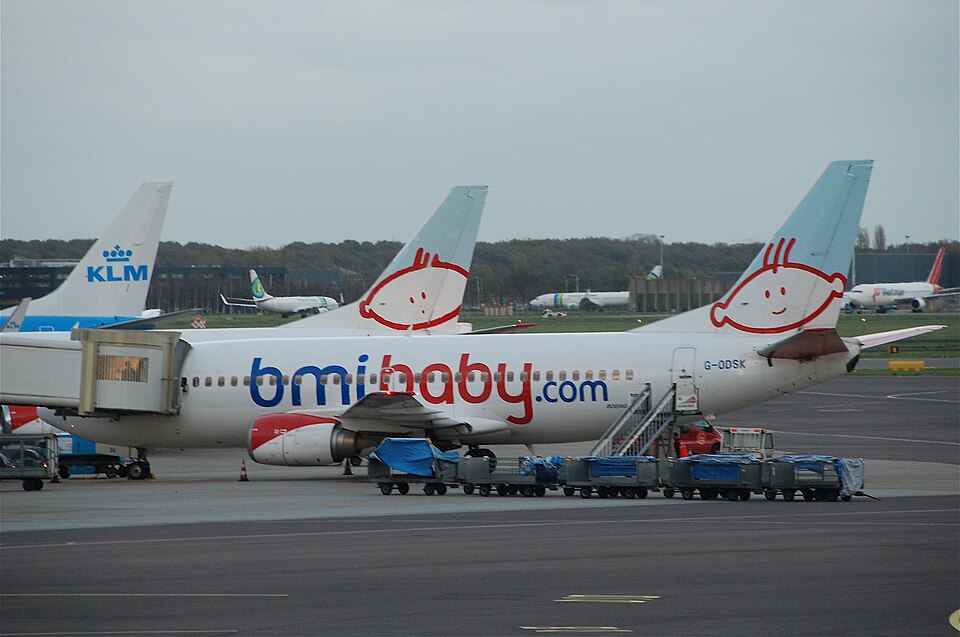
On 17 March 1998, at 1040 hours UTC, a Boeing 737-300 (registration G-ODSK) was parked at London Heathrow Airport's Stand B6. The crew of eight and 76 passengers were preparing for departure when a baggage belt loader vehicle maneuvering near the forward cargo door struck the aircraft. The collision resulted in structural damage to both the aircraft's forward cargo door area and the baggage loader vehicle. No injuries were reported.
Vehicle Brake Failure
The vehicle driver reported that the brakes did not function as the loader approached the aircraft. Post-incident examination revealed that the forward left-hand disc brake caliper unit had completely detached from the stub axle, severing the brake system hydraulic pipes in the process. Investigators recovered only one of the two caliper mounting bolts at the scene.
Caliper Attachment and Engineering Deficiencies
Examination of the brake unit showed that the lower of two screws attaching the brake caliper to the stub axle had worked loose in service and had completely unscrewed from the stub axle lug. With the lower screw missing, all braking loads were carried by the top lug, which suffered progressive failure, most likely due to fatigue. The caliper then rotated with the disc plate, breaking off the rigid brake fluid pipes between the pipe support bracket and the brake caliper, rendering the brakes inoperative.
Further inspection identified several points of sub-standard engineering practice:
- The screws used to attach the caliper to the stub axle were threaded along their entire length. In such applications, screws are primarily subjected to shear loads, and it is not good engineering practice to use screw threads to carry shear loads; plain shank bolts should be used.
- Only three threads of the caliper attachment screws were engaged in the threads of the stub axle. Good engineering practice requires a minimum of 1.25 times the screw/bolt diameter engaged (approximately 8.5 threads in this case), with at least 1.5 full threads protruding beyond the nut or lug after tightening.
- The assembly included a plain steel washer, a spring steel lock washer, and a brake pipe support bracket made of mild steel between the screw head and the caliper body. The use of multiple layers in such joints is normally avoided because they show an enhanced tendency to work loose due to relative movement between the layers.
Maintenance History and Operator Response
The baggage belt loader was of a new design, one of four delivered to the operator during the third quarter of 1997. The operator had noticed a tendency for the caliper attachment screws to lose torque over time and introduced a torque check during periodic maintenance. The last six-weekly maintenance check was performed on 21 January 1998, during which the caliper attachment screws were reported to have been re-torqued. Following this incident, the operator withdrew all similar vehicles from service while the manufacturer reassessed the method of attaching the brake caliper unit to the stub axle.