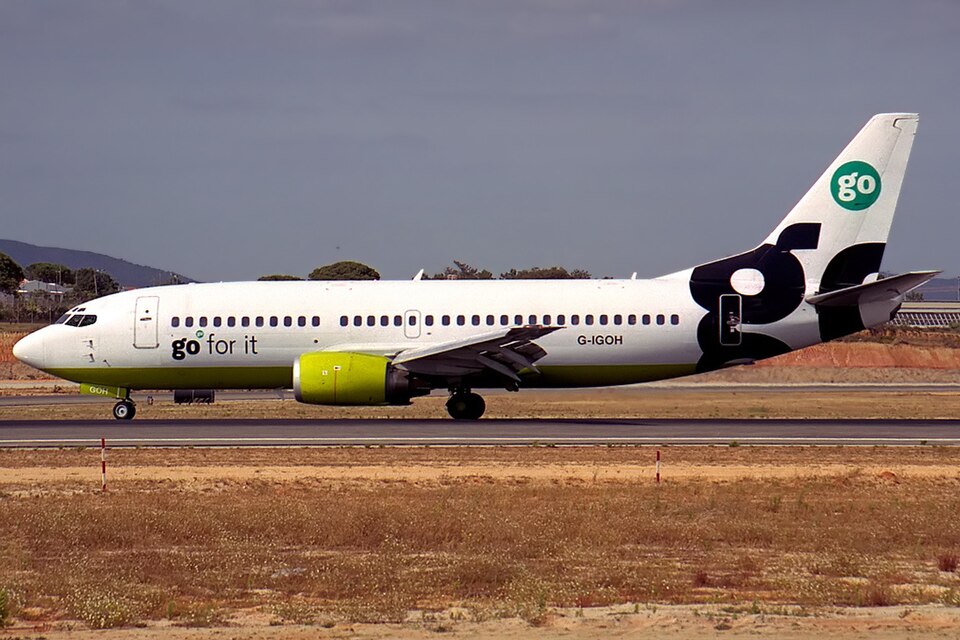
Incident
On 24 January 1999, a Boeing 737-300E (registration G-IGOH) was in cruise at Flight Level 260 near Talla reporting point, Scotland, experiencing moderate turbulence. The flight crew heard a continuous ticking or clicking sound and found they could not select a lower altitude using the Mode Control Panel (MCP). The autopilot was disengaged and descent was initiated manually. During the descent, severe arcing was observed on the front windscreens, followed by loss of MCP heading and indicated airspeed. The crew executed a high-speed descent below cloud level, declared a PAN to ATC, and continued the approach using raw ILS data, landing safely at Edinburgh. There were no injuries to the 5 crew and 45 passengers.
Investigation
Initial examination of the MCP, cables, and connectors revealed no obvious defects. After removing the instrument panel coaming, a power cable integral with the MCP floodlight panel was found chafed through to the conductor, positioned such that it had contacted the MCP. The damage was within 0.5 inch of an in-line connector used for the floodlight panel wiring. The maintenance organisation noted that the insulation of the floodlight panel wires appeared less robust than normal and unlike other wiring on the aircraft. A small polished area on the MCP was present where contact may have occurred, but no arcing damage was evident at that location. Other wiring in the area was inspected and found undamaged.
Findings
The damaged wire was replaced along with the in-line connector, after which the MCP functioned normally. However, to ensure no internal damage, the MCP was replaced with one removed two days earlier due to defects in the commander's course selection and flight director. The aircraft was released to service with a CAT 1-only limitation pending bench testing of the removed MCP. The maintenance organisation informed the manufacturer and initiated a fleet-wide inspection of similar aircraft to check for wiring abrasion, as inspection of other aircraft had revealed at least one instance of insulation abrasion where wires contacted the MCP.
Probable Cause
Not stated in the source.