Flight Details
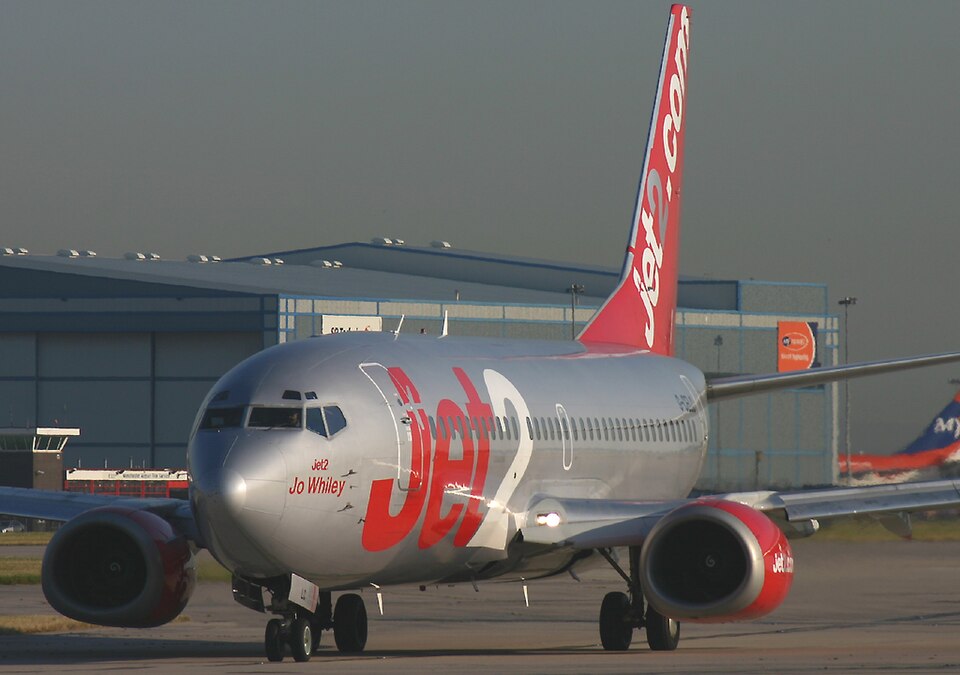
A Boeing 737-33A, registration G-CELC, was operating a commercial air transport passenger flight from Leeds Bradford Airport to Chambery Airport, France, on 7 February 2010. The aircraft was crewed by six and carried 103 passengers. No injuries were reported and no damage was sustained.
Approach and Incident
The flight crew planned an ILS approach to Runway 18 with a circling approach to Runway 36, due to forecast northerly winds. The co-pilot was the pilot flying. En route, the crew received ATIS information indicating wind from 340° at 9 kt. ATC cleared the aircraft for the ILS approach via the VIRIE holding pattern.
At 1150 hrs, as the aircraft crossed the initial approach fix, ATC advised the commander of wind from 360° at 7 kt and asked if he could accept a landing on Runway 18. The commander agreed. The aircraft left the hold at 6,500 ft in IMC with autopilot engaged.
The commander selected the ILS frequency and observed correct indications. At 12 nm from the airfield, the aircraft captured the localiser in VOR/LOC mode. As the aircraft approached 11 DME, the autopilot vertical speed (VS) mode engaged and the aircraft began descending at about 2,200 fpm.
The commander noticed his ILS information was lost and cycled the AUTO/MAN switch, restoring his indications. Meanwhile, ATC contacted the aircraft with a frequency change. Before checking in, the commander noted the aircraft was below the glideslope and descending at over 2,000 fpm.
Go-Around and EGPWS Warning
The commander queried the co-pilot, who responded that he was not happy and initiated a go-around. At that moment, an EGPWS Mode 2 "TERRAIN TERRAIN, PULL UP" warning activated. The co-pilot increased pitch to 32.7° nose up. The aircraft climbed clear of terrain, reaching a minimum altitude of 1,112 ft above ground.
The aircraft broke out of cloud at 6,000 ft with a pitch attitude over 20° nose up and airspeed 110 kt. The crew adjusted track towards the CY NDB due to uncertainty about position and navigation reliability.
Second Approach and Aftermath
The commander contacted ATC to ask about ILS serviceability; ATC confirmed it was serviceable. The crew conducted a second approach successfully. Post-incident inspection of the aircraft found no faults with the navigation system, and none were reported after the aircraft returned to service.
The ILS at Chambery was last flight-inspected on 26 November 2009 and found conforming to Category I requirements. The airport is designated Category C, requiring special training for commanders, which the commander had received four years earlier and maintained annually.