History of the Flight
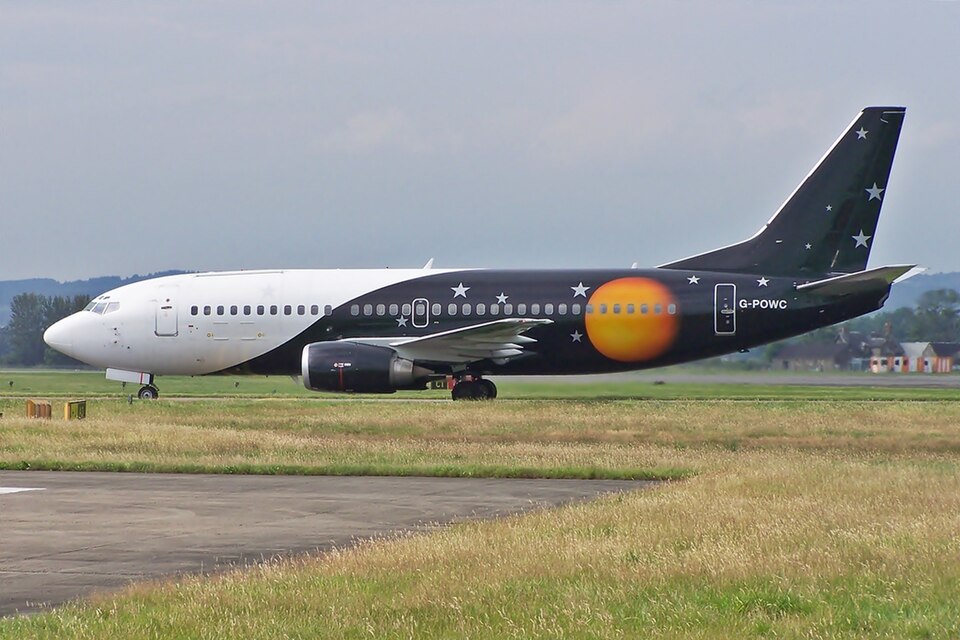
The aircraft, a Boeing 737-33A registered G-POWC, was operating a cargo flight from Edinburgh Airport to Stansted Airport on 19 November 2013. The load consisted of eight unit load devices (ULDs) containing mail freight. Due to the basic aircraft center of gravity, standard practice was to load the heaviest ULDs at the rear and lighter ones forward, with empty ULDs placed in the frontmost positions.
The commander witnessed the ULDs arriving and noted that a number on one matched the load instruction form. However, the crew did not verify the positions of the ULDs after loading. The operator's Operations Manual did not require such a check, but stated a final check could be performed by confirming that the last ULD loaded into the forward bay was as expected. The commander indicated that the turnaround was rushed because of the late arrival of the load and fuel, so this check was omitted.
Loading Error
The mail company had prepared a Load Order Form showing the intended configuration with heaviest ULDs aft. During loading, the ULDs were inadvertently placed in the reverse order, with the heaviest forward. The planned takeoff CG index was 38.8 units, within the forward limit of about 16 units. With the reverse loading, the actual index was 3.8 units, placing the CG well ahead of the flight envelope.
Flight Performance
During takeoff, when the commander (pilot flying) attempted to rotate, he encountered greater than normal control column back-pressure, resulting in a slow and late rotation. Flight data recorder information showed that rotation began at approximately 141 KIAS, whereas the calculated rotation speed (VR) was 128 KIAS, and the normal rotation rate is 2.5-3° per second. The actual rate was about 1° per second.
In the climb, the crew observed that approximately 1 to 1.5 more units of nose-up pitch trim were needed compared to usual. They suspected a loading error but, as the aircraft flew normally, decided to continue to the destination. During the approach, they again noticed additional nose-up pitch trim requirements. After landing, the commander went to the cabin and discovered that the ULDs were loaded in reverse order.
Safety Actions
The operator implemented two measures to prevent recurrence. Flight deck crew must now verify each ULD number as it is loaded. Additionally, a 'pyramid' loading system was adopted, where the heaviest ULDs are placed toward the center of the aircraft to mitigate the effects of any loading errors.