Introduction
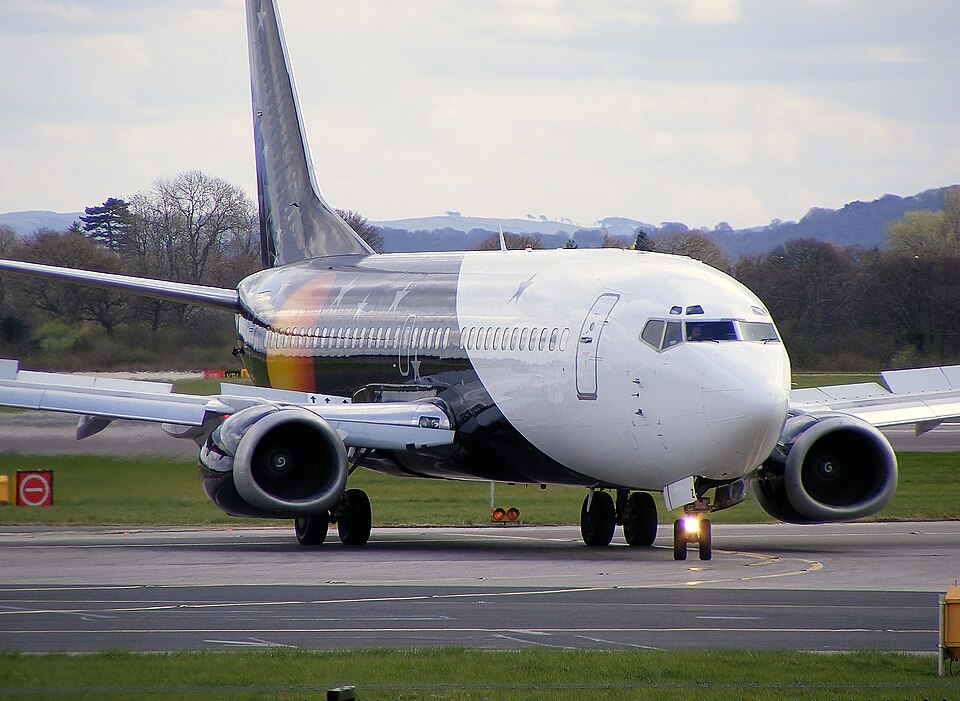
On 14 April 2012, a Boeing 737-33A, registration G-ZAPZ, operated a commercial passenger flight from Chambery Airport, France, to London Gatwick Airport. During takeoff, the aircraft sustained a tailstrike, resulting in damage to the rear fuselage. The flight crew reported no injuries among the 5 crew and 131 passengers.
History of the Flight
The crew reported for duty at 0625 hrs at London Stansted Airport and positioned the aircraft without passengers to Chambery. After an uneventful flight, they landed at 0915 hrs. The return flight was scheduled for 1000 hrs. Pre-flight preparations proceeded normally, with the commander programming the route into the Flight Management Computer (FMC) and the co-pilot completing the manual load sheet. The commander cross-checked the load sheet and entered the Zero Fuel Weight (ZFW) into the FMC, which calculated the Takeoff Weight (TOW). The commander read back the TOW to the co-pilot, who confirmed it matched the load sheet.
Performance Calculation
The commander then used an Electronic Flight Bag (EFB) computer to calculate takeoff performance. He opted for an optimum flap setting, which the EFB selected as Flap 1. The EFB was used to compute takeoff speeds and thrust settings. Unbeknownst to the commander, he omitted to enter the aircraft's TOW into the EFB, causing the system to default to the previous flight's TOW from Stansted (46,300 kg instead of the correct 52,900 kg). Consequently, the EFB calculated lower takeoff speeds (V1 118 kt, VR 127 kt, V2 140 kt) and thrust (88.6% N1, assumed temperature 47°C) than required. The crew did not cross-check these figures against the FMC-calculated speeds.
Takeoff and Tailstrike
The aircraft took off from Runway 36 at 1008 hrs. During rotation, the control column was pulled back at a computed airspeed of 126 kt, and the pitch attitude increased. Approximately four seconds later, the pitch attitude exceeded 10.8°, causing the tail to strike the runway. Both pilots felt a slight judder, which they attributed to turbulence from the preceding aircraft. No abnormal flight deck indications were noted. After landing at Gatwick, ground personnel informed the crew of damage to the underside of the rear fuselage, prompting a review of the takeoff data. This revealed the omission of the TOW entry.
Aircraft Damage
Damage was confined to the rear fuselage skin, with deep longitudinal scoring over a length of 1.9 m, from just forward of fuselage station BS927 to aft of BS987. The two lowermost fuselage stringers were abraded. The rear heated drain mast was also abraded and bent. The damage created a small leak path for cabin pressurization, but the leakage rate was insufficient to affect pressurization during the flight.
Post-Event Findings
During the investigation, it was reported that the elevator feel forces on G-ZAPZ were particularly light. A subsequent maintenance inspection revealed a broken spring within the elevator feel and centering unit. The outer main spring had fractured, reducing the control column pull force during rotation from approximately 30 lb.f to about 20 lb.f. The aircraft manufacturer concluded that the broken spring contributed to the excessive pitch attitude achieved during rotation.
Electronic Flight Bag Issues
The EFB software, referred to as 'the Guru', was a touchscreen hand-held computer used for performance calculations. The investigation identified wider issues regarding the design and use of EFBs for calculating performance data, leading to two Safety Recommendations.