History of the Flight
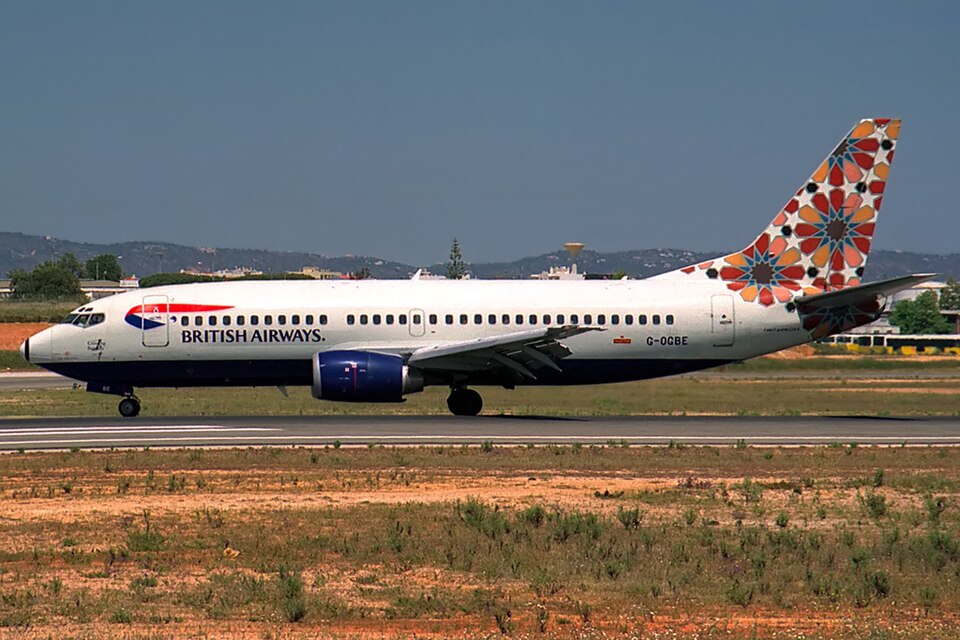
The aircraft, G-OGBE, was scheduled to operate a commercial air transport flight from Birmingham to Edinburgh. The weather conditions included surface wind of 350°/6 kt, visibility 2.5 km in snow, broken cloud at 2,600 ft, and a temperature of 0° C. The crew requested de-icing, which was performed by the handling agent using Type 2 fluid from 0659 to 0713 hrs, with a holdover time between 30 and 65 minutes.
During pre-flight preparations, it was normal practice for the first officer to set the stabiliser trim to the takeoff position when checking the loadsheet. However, because the aircraft was being de-iced at that time, the trim could not be set. During the after-start checks, the crew focused on leaving the flaps up to avoid slush while taxiing, and the trim setting was not checked.
While taxiing, the snow became "moderate to heavy" according to the captain, who then turned his attention to the holdover time. He reduced it to between 35 and 40 minutes, giving a last takeoff time of 0739 hrs. The crew selected flaps for takeoff at the holding point and began the takeoff run at 0737 hrs.
The first officer, the handling pilot, attempted to rotate at VR using a "normal pull" on the control column. When this had no effect, he "doubled his effort" and called to the captain. The captain, aware of no rotation, decided to stop the aircraft. Four seconds after the first rotation attempt, the thrust levers were closed, and the crew performed the rejected takeoff procedure. The aircraft stopped with 900 m of runway remaining, vacating at the upwind end. The fire service inspected the brakes and reported it safe to proceed to stand.
During the taxi back, the crew noticed the stabiliser trim was set to 3 units instead of the required 4.5 units. No evidence of control restriction due to icing was found.
Takeoff Performance
The takeoff mass was 46,776 kg. The crew used the next higher mass on the Regulated Takeoff Mass (RTOM) table (48,500 kg) for wet runway performance, giving V1 of 126 kt, VR of 132 kt, and V2 of 139 kt. The aircraft was well below its runway-limited takeoff mass, and a range of V1 speeds likely existed but were not calculated. The flight data recorder showed pitch trim set to 2.3 units. At 135 kt, the control column was pulled aft by 7°, increasing pitch attitude by 1° (sufficient for the nosewheel switch to change to air mode), but the nose dropped back immediately and the switch returned to ground mode. The takeoff was rejected from 155 kt.
Human Factors
The operator's usual practice was for crews to alternate as handling pilot. Due to the poor weather forecast, it was decided the captain would fly the return sector, so the first officer planned to operate the outbound sector. The first officer later stated he had been less comfortable about the weather than the captain. The captain was not sufficiently aware of the first officer's concerns to decide to operate the outbound sector himself.
A number of distractions and unusual situations before takeoff disrupted normal procedures and allowed a missed action to go unchecked. The usual flow of pre-flight activities included triggers for setting the stabiliser trim, but this was disrupted by de-icing. The trim setting would normally be checked during the after-start checklist, but the crew was distracted by the unusual requirement to leave the flaps up while taxiing.
As the aircraft taxied, deteriorating weather increased workload and introduced a takeoff time constraint. The captain believed he and the first officer felt pressured by the need to meet the revised holdover time. This was compounded by an ATC taxi clearance requiring the longest route to the holding point, causing the aircraft to be at the back of the queue. While focusing on selecting takeoff flap, they did not notice the incorrect trim setting.
The takeoff commenced just inside the revised holdover time limit, and the captain was "very aware of this situation" at the decision point. He was very aware of snow and potential ice-accretion coupled with holdover times. When the first officer could not rotate, the captain quickly decided to reject the takeoff, judging there was sufficient runway remaining and believing the aircraft was not capable of flying. The trim setting, although incorrect, was within the green band range (1.0 to 6.3 units), so no warning horn sounded.
Subsequent Actions by the Operator
Crews were reminded that a configuration warning will not sound to prevent a takeoff with the trim set to the full nose-down position by the electric trim switch. The standard operating procedure and checklist action for setting the stabiliser trim is being reassessed, as is the de-icing procedure, to prevent interaction that could make a recurrence likely. This incident will be discussed with all crews as part of technical refresher training, and advice will be given regarding decisions to reject a takeoff. Crews will also be reminded that weather conditions might sometimes preclude first officers from operating a sector.