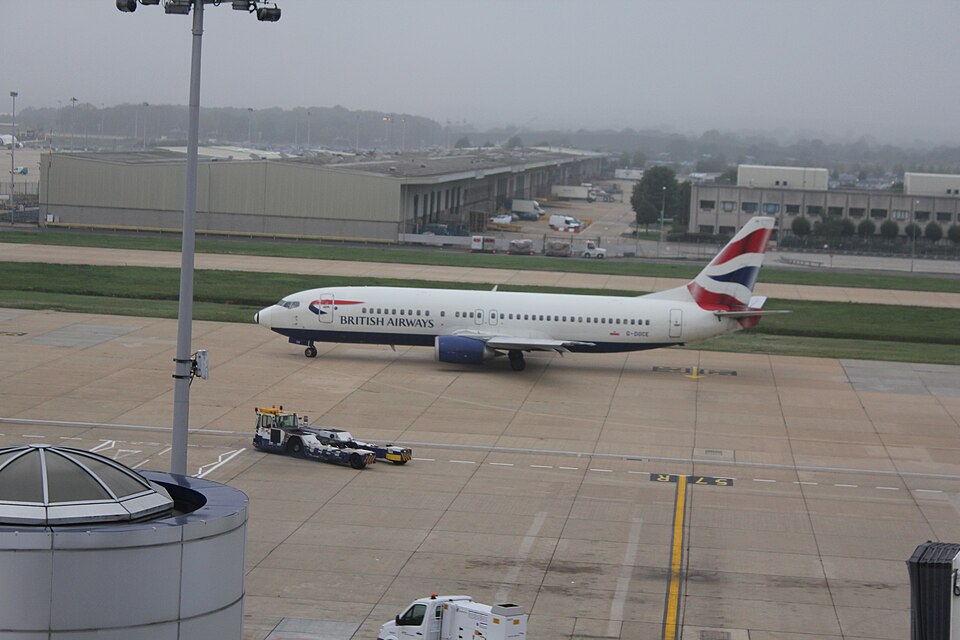
Incident Overview
On 30 May 2003, a Boeing 737-436 (registration G-DOCE) operated by an unnamed airline was en route from Marseille to London Gatwick. While cruising at Flight Level 340, the crew experienced ear discomfort, followed by the cabin altitude warning horn indicating a climb above 10,000 feet. The primary AUTO pressurization mode failed, indicated by the AUTOFAIL light, and the system switched to STBY mode. Seconds later, the STBY light extinguished, indicating loss of all automatic pressurization control. The crew selected manual AC mode but could not control the outflow valve. They donned oxygen masks and initiated an emergency descent at 6,000 feet per minute, then diverted to Lyon, France. Seven passengers sustained minor injuries, primarily ear and sinus problems. The aircraft landed safely.
Pressurization System and Failure
The Boeing 737-400 pressurization system controls cabin altitude via a rear outflow valve (OFV) with two motors (AC and DC). Automatic control uses the AC motor; STBY backup uses the DC motor. Manual modes (AC MAN and DC MAN) allow direct valve control. The failure involved all four modes. Investigation traced the cause to a burnt wiring loom in the area aft of the aft cargo hold. The loom (W298) contained wires for the OFV, aft drain mast heater, aft door warning, and water tank quantity system, carrying 28V DC, 115V AC, signal, and ground circuits.
Engineering Investigation
Upon arrival at London Gatwick, the OFV was replaced but did not resolve the issue. The pressure controller then failed bench tests due to damaged diodes in the AC motor feedback circuit. Subsequent inspection revealed a damaged wiring loom with melted insulation near a p-clip and a melted zip strap. The wires, specified as BMS 13-51F (Kapton-insulated), showed copper deposits on the p-clip, indicating abrasion. Detailed examination concluded that long-term fretting against a p-clip or zip strap abraded the insulation, exposing conductors and causing short circuits, leading to burning. The initiating point could not be determined due to damage.
Maintenance Records
The area was last disturbed during a major 7C service in December 2001, which included routine surveillance inspection. No defects were recorded.
Quick Access Recorder Data
Data showed cabin altitude stabilized at about 7,000 feet during climb. Approximately 43 seconds after reaching FL340, cabin altitude began rising rapidly, exceeding 10,000 feet within seven seconds, reaching a maximum of about 11,000 feet. During emergency descent at 6,000 fpm, cabin altitude decreased, indicating partial control. The aircraft leveled at 7,000 feet with cabin altitude around -1,000 feet.