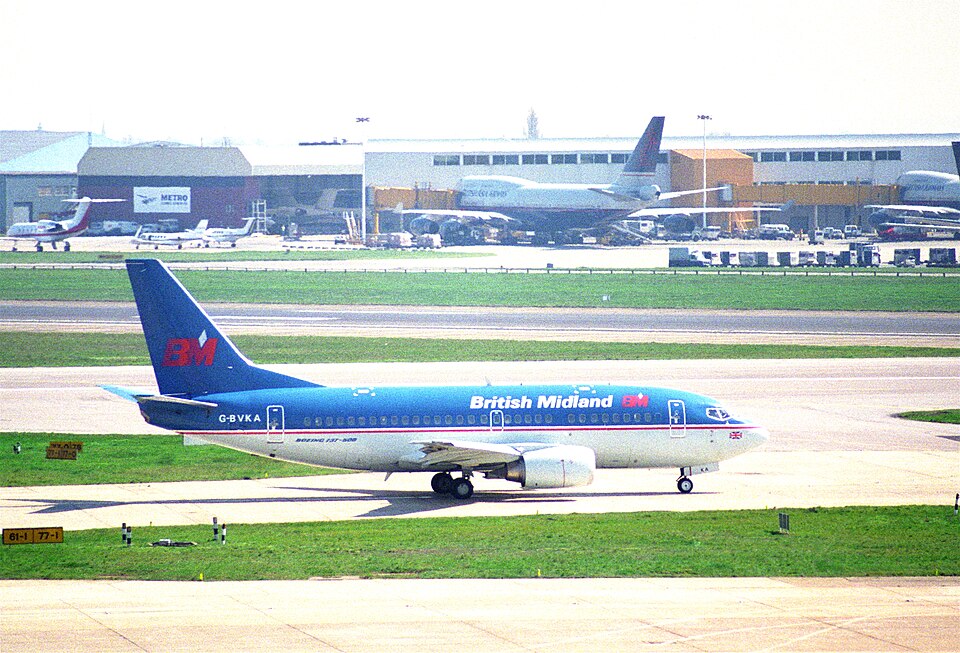
Radome damage during pushback at London Heathrow

Casualties unknown • Stand B21, London Heathrow Airport, GB

A Boeing 737 sustained damage to its radome during a routine pushback maneuver at London Heathrow Airport due to a loss of traction by the tug.

What happened

On 19 February 1998, during a scheduled public transport operation at London Heathrow Airport, a Boeing 737-59D, registration G-BVKA, experienced an incident while being positioned for departure. As the pushback procedure was nearing completion, the tug driver attempted to maneuver the tug to align the aircraft with the taxiway centerline. During this movement, the tug lost traction, causing the upper portion of the driver's cab to make contact with the right side of the aircraft's radome. There were no injuries to the 37 passengers or 7 crew members on board, though the aircraft sustained damage to the radome.

The investigation

An investigation conducted by the Ramp Training and Safety Manager examined the circumstances surrounding the impact. The driver involved was undergoing training at the time of the event. The aircraft commander, an experienced pilot with 10,000 hours on type, noted that the pushback had appeared normal until the moment of impact and confirmed that both CFM56-3C1 engines were running. The investigation looked into the environmental conditions, noting that the ramp surface was likely greasy following overnight rain after a prolonged dry spell. The investigation also noted a slight dip in the taxiway surface at the point of the incident.

Findings

  • The primary cause of the incident was the loss of traction by the tug while attempting to straighten the aircraft.
  • The greasy surface conditions, resulting from recent rainfall, contributed to the loss of grip.
  • The operation of both aircraft engines and a slight depression in the taxiway surface further complicated the maneuver.

Safety action

Following the event, the Ramp Training and Safety Manager issued a 'Ramp Alert'. This notification was intended to advise tug drivers and headset operators to maintain closer communication with aircraft commanders when operating on slippery ramp surfaces.

Probable cause

The incident was caused by the tug losing traction while maneuvering the aircraft onto the taxiway centerline, a situation exacerbated by greasy ramp conditions, the operation of both engines, and a dip in the taxiway surface.

All Boeing 737-800 accidents →

Frequently asked questions

What happened in the 1998-02-19 BOEING 737-59D accident near Stand B21, London Heathrow Airport, GB?

A Boeing 737 sustained damage to its radome during a routine pushback maneuver at London Heathrow Airport due to a loss of traction by the tug.

What aircraft was involved and where did it happen?

The accident on 1998-02-19 involved a BOEING 737-59D, registration G-BVKA, at Stand B21, London Heathrow Airport, GB.

What was the probable cause of the accident?

The incident was caused by the tug losing traction while maneuvering the aircraft onto the taxiway centerline, a situation exacerbated by greasy ramp conditions, the operation of both engines, and a dip in the taxiway surface.

Loading the flight search…

What you can do on Flight Finder

  • Search flights between any two airports with live fares.
  • By aircraft — pick a plane model (e.g. Boeing 787, Airbus A350) and see every route it flies from your origin.
  • Route map — click any airport worldwide to explore its destinations, or draw a radius to find nearby airports.
  • Global aviation safety — aviation accident database, 40,000+ records since 1980, with map and rankings by aircraft and operator.
  • NTSB safety feed — recent U.S. aviation accidents and incidents from the official NTSB CAROL database, updated daily.