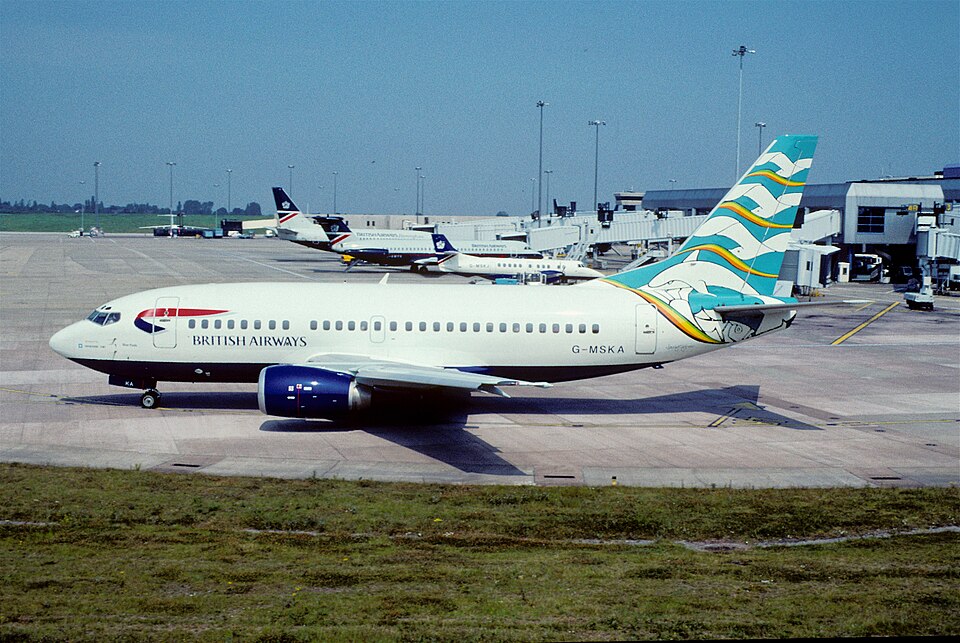
Incident Summary
On 14 April 1998, at 1820 UTC, a Boeing 737-5L9 (registration G-MSKA) was descending towards Birmingham Airport on a public transport passenger flight. The aircraft had 7 crew and 49 passengers on board, none of whom were injured. There was no damage to the aircraft.
Sequence of Events
During the descent, a single meal was placed into the empty No 1 oven in the forward galley. After one minute, the meal was removed and the oven was switched off using the controller. Approximately one minute later, a smell of burning was detected. The oven was opened but no problems were visible. About 30 to 40 seconds later, the smell intensified, and upon further inspection, a bright red glow was seen around the back of the rear internal oven panel. The purser informed the flight deck that the oven was on fire.
The flight crew made a PAN call and was given an expeditious approach by air traffic control. Cabin crew discharged a BCF fire extinguisher into the oven, but the fire appeared to worsen. The flight crew upgraded the emergency to a MAYDAY and advised ATC that they intended to stop on the runway to assess the fire before possibly evacuating. A second BCF extinguisher was discharged into the oven.
After the aircraft came to a stop, the purser checked the oven and confirmed the fire was completely extinguished. He declared the fire under control and deemed it safe to taxi to the stand. As a precaution, the fire brigade escorted the aircraft to the gate, where a nurse was in attendance.
Investigation Findings
The fire was caused by an overheated oven element. There was no smoke or flames, and no excessive temperatures were measured outside the oven. The oven was powered by 3-phase 115 volts AC and was fan-assisted, with three heating elements powered separately by each phase through a common control relay. The power to the oven passed through four switching devices: a thermostatic controller, an overheat protection trip, a circuit breaker, and a galley master switch on the flight deck. No attempt was made to pull the circuit breaker or operate the galley master switch, indicating that the fire was not recognized as an electrical fire. This was consistent with a survey of Boeing 737 galley fires on the CAA MOR database, which recorded over 150 instances, most caused by fat or food debris combustion.
Engineering staff checked the oven while it was still installed and found no defects. The oven and its controller were examined in the maintenance workshop, again with no defects found, though evidence of overheating on the oven elements was noted. Both the oven and controller were sent to an overhaul agency, which confirmed that one element had been subject to overheating. The controller had no relevant defects.
It was determined that the problem resulted from a control failure: selecting OFF should de-energize the fan and the heating element control relay. Evidence suggested that one contact of the relay failed to open when the oven was switched off, causing power to continue to one element. Without the fan to dissipate heat, and with the normal thermostatic control bypassed, the element continued to heat until it glowed red. Vibration during landing likely released the relay contact, allowing the element to cool. The oven's overheat protection trip did not activate; it was subsequently tested and found serviceable, indicating it did not reach the necessary temperature to trip.
Conclusion
The reported fire was caused by an overheated oven element due to a control relay failure. As a result of the non-use of the circuit breaker or galley master switch, flight deck and galley procedures were being reviewed.