Incident Overview
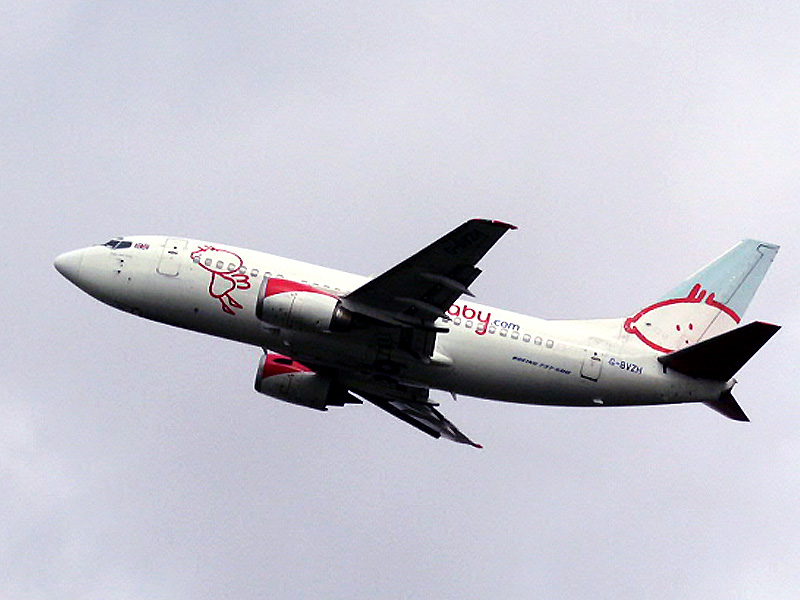
On 25 January 2002 at 1905 UTC, a Boeing 737-5Q8 (registration G-BVZH) operating a public transport flight from Europe was taxiing onto Stand C28 at London Heathrow Airport. The aircraft had 6 crew and 70 passengers on board; no injuries were reported. The left engine cowling was damaged after contacting the underside of the air-bridge.
Weather Conditions
The commander reported severe weather with driving rain and a strong southerly wind. Visibility was described as intermittently distorted, even with windscreen wipers operating. It was dark at the time.
Parking Maneuver
Parking on Stand C28 required a turn of approximately 110° from the taxiway. The commander noted difficulty in locating the stand centreline because the yellow paint line was hard to see in the prevailing conditions. The time taken to establish the aircraft on the centreline distracted him from recognizing where to stop. After realizing the aircraft's position "did not feel right," he applied brakes and stopped from a speed of 1 knot. The nosewheel had overshot the Boeing 737 parking position and stopped on the Boeing 757 mark, causing the left engine cowling to contact the air-bridge.
Contributing Factors
In his report, the commander commented that the Boeing 737 and Boeing 757 identification labels on the Parallax Aircraft Parking Aid (PAPA) could be confused due to their similarity and the poor state of the PAPA's lighting. The illumination of the labels was degraded by green mould on the light cover. Additionally, the vertically mounted white fluorescent alignment light was described as too bright. The representation of the stand on the aerodrome ramp chart was misinterpreted, showing a 90° turn instead of the greater angle required. Examination of the stand revealed worn yellow paint markings.
Stand Guidance Systems
The visual docking guidance system on Stand C28 was AGNIS/PAPA (Azimuth Guidance for Nose-in Stands/Parallax Aircraft Parking Aid). The AGNIS/PAPA was found to be operating correctly, but the lighting for the aeroplane type identification labels on the PAPA's black board was reduced by green mould and dirt. In dark, dry conditions, the labels were clearly visible from the flight deck; however, in the severe weather described, less than maximum illumination increased the risk of confusion. No evidence indicated that the primary alignment indication from the AGNIS was adversely affected.
Post-Incident Actions
Following the incident, the airport authority restored the lighting level on the PAPA for this stand. The yellow taxiway and apron markings are subject to a rolling maintenance programme. The operator, acknowledging crew responsibilities, arranged further training.