Incident Overview
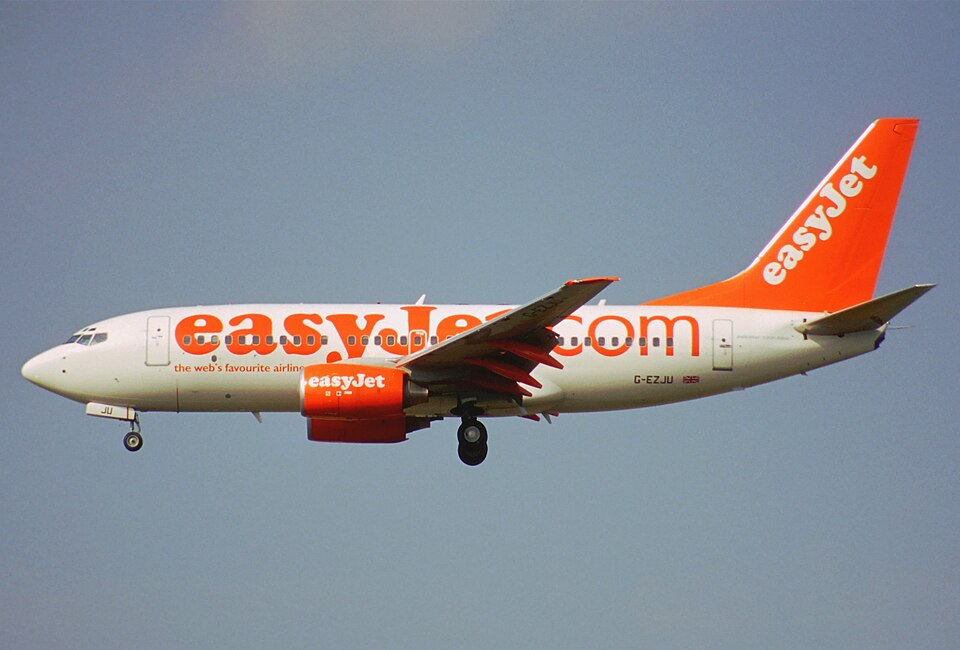
On 19 July 2004 at 0840 hours, a Boeing 737-73V, registration G-EZJU, was positioned at Stand 13 of Belfast International Airport, Northern Ireland. The aircraft was preparing for a public transport passenger flight with 5 crew and 137 passengers on board. The crew had received push-back and start clearances and were partway through the 'cleared for start' checklist when they heard and felt an impact against the aircraft.
Sequence of Events
The checklist was discontinued. The captain communicated with ground crew through the open left direct vision window and established that a vehicle collision had occurred. The push-back was cancelled, and the crew completed shutdown checks. The cabin crew were instructed to disarm the doors and deploy the airstairs.
Upon vacating the aircraft, the captain observed that a tug—typically used to move steps and other ground equipment around the apron—had collided with the left side of the aircraft below the flight-deck windows, between the total air temperature probe and the forward jacking point. The collision resulted in two large penetrations of the outer skin: one approximately 30 cm in length and another approximately 20 cm in length. The operating company, handling agents, and airport authorities were notified, and the passengers and crew disembarked.
Driver's Account
The driver of the tug reported that while attempting to apply the foot brake, he inadvertently depressed the accelerator, causing the vehicle to move rapidly towards the aircraft. Although outside the two-metre area control, the driver was unable to stop the vehicle in time to prevent the nearside corner of the tug's roof from striking and puncturing the left side of the fuselage. During his attempt to avoid the collision, the driver turned the steering wheel hard left. As a consequence, a lamp cluster mounted on the nearside rear corner of the tug's roof struck the fuselage side as the vehicle came to rest, resulting in a second penetration of the fuselage skin.
Damage and Aftermath
The aircraft sustained two gashes, 30 cm and 20 cm in length, just forward of the air stairs door. There were no injuries to crew or passengers. The aircraft was a Boeing 737-73V, manufactured in 2003, equipped with two CFM56-7B20 turbofan engines. The commander held an Air Transport Pilot's Licence, was 29 years old, and had accumulated 5,040 total flying hours, including 2,500 hours on type.