Approach and Missed Approach
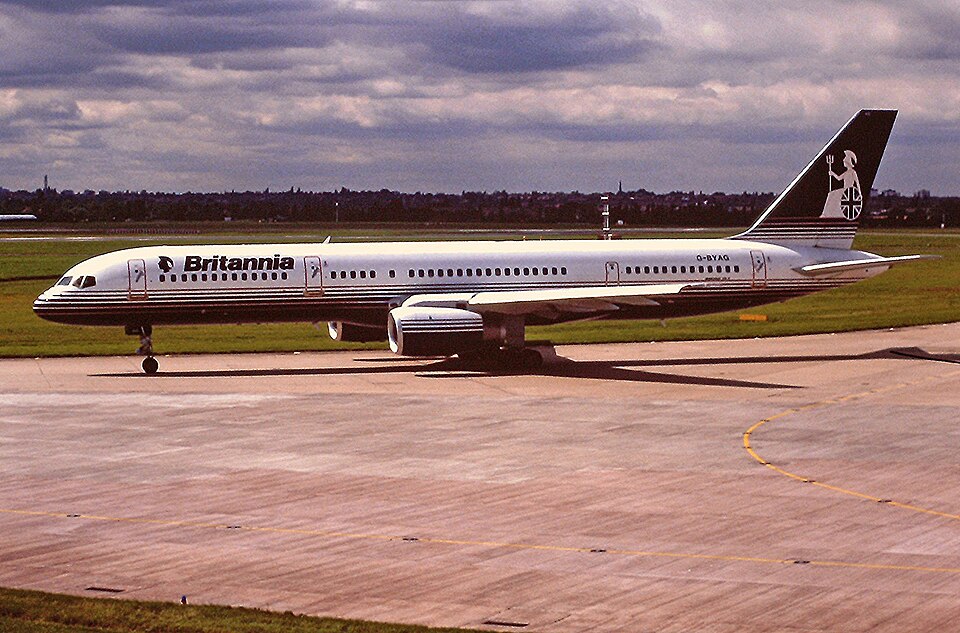
Flight BY226A departed Cardiff at 20:40 local time on a charter flight to Gerona. The crew contacted Gerona air traffic control at 23:14. A thunderstorm in the area created turbulent conditions. ATC offered an ILS approach to runway 20, but the crew opted for a VOR/DME approach to runway 02 considering the wet runway, downslope, and tailwind. At 23:33, in full landing configuration and just after passing 10 DME, the crew was advised of a wind shift to 200 degrees at 12 knots. Upon becoming visual, the aircraft was not adequately aligned with the runway, and the new wind direction favored the reciprocal runway, so a missed approach was executed.
Second Approach and Touchdown
The crew then positioned for an ILS approach to runway 20. During the approach, they noted that the company minimum fuel for diversion to Barcelona (2,800 kg) had been reached. At 23:46:58, at 250 feet above ground level (agl) and on the correct glidepath, the captain disengaged the autopilot and autothrottle. The aircraft began deviating above the glidepath. Twelve seconds later, at 110 feet agl, the captain briefly pushed the control column nearly full forward before returning it to neutral. The aircraft pitched down to -4.5° nose down then back to -2.5° nose down. During this period, the captain lost visual reference with the runway because all runway lights suddenly failed. The GPWS then issued a sink rate warning as the thrust levers were retarded to idle.
At 23:47:17, the aircraft touched down in a 2° nose down attitude with a peak normal acceleration of 3.11 g. It bounced, the nose pitched up to +3.3°, and a roll to the right commenced. Both thrust levers advanced, and engine power increased to 1.18 EPR. Full nose down elevator was applied and held until a second touchdown 1.9 seconds later, resulting in a rapid pitch down to -0.5° pitch attitude with a pitch rate of 7°/sec nose down and 4.2° right roll.
Post-Touchdown Sequence
After traveling approximately 343 meters across flat grassland beside the runway, the aircraft ran diagonally over a substantial earth mound adjacent to the airport boundary, becoming semi-airborne. On the far side, it struck and severed several medium-sized trees, predominantly with the right wing, and the right engine nacelle hit the boundary fence. The aircraft, yawed considerably to the right of its direction of travel, passed through the fence, re-landed in a field, where both main landing gears collapsed. It came to rest after a 244-meter slide, with the fuselage almost structurally severed at two points.
Investigation Findings
The official investigation determined that the most probable cause was the destabilization of the approach below decision height with loss of external visual references and automatic height callouts immediately before landing, resulting in a touchdown with excessive descent rate in a nose down attitude. The displacement of the nose landing gear support structure caused disruption to aircraft systems, leading to uncommanded forward thrust increase and other effects that aggravated the consequences. Contributory factors included impairment of the runway visual environment due to darkness and torrential rain, extinguishing of runway lights, suppression of height callouts by the GPWS "SINK RATE" caution, possible shock or mental incapacitation of the pilot flying, lack of simulator training for go-around below decision height, and insufficient evaluation of the weather conditions.