Accident Overview
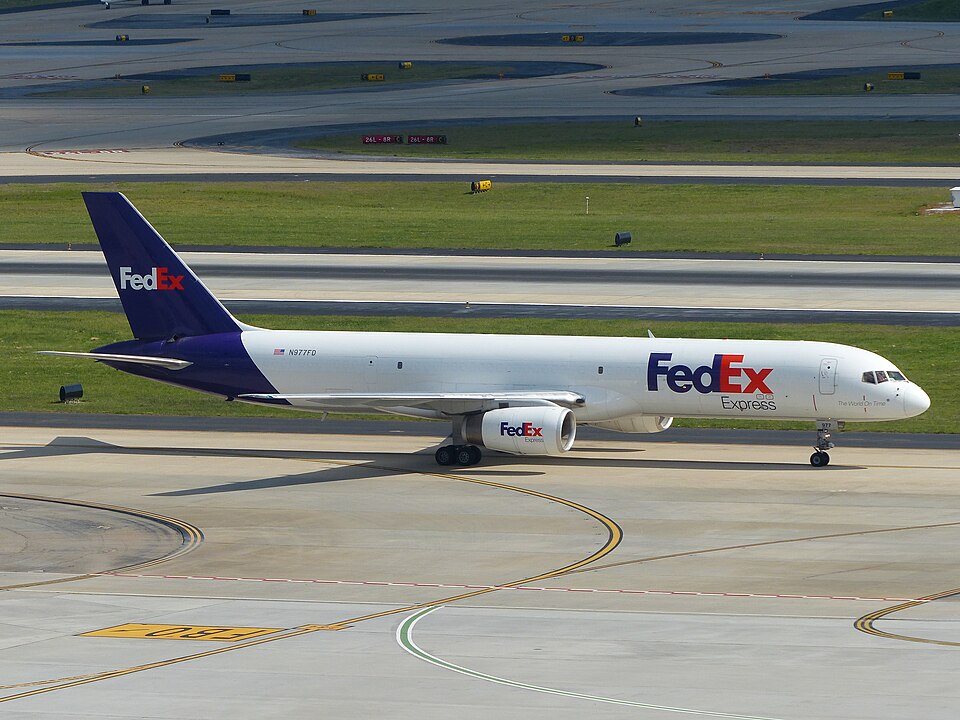
On approach to Chattanooga Metropolitan Airport-Lovell Field (CHA) in Chattanooga, Tennessee, the crew of Federal Express flight 1376, a Boeing 757-236, was unable to extend the landing gear. The aircraft subsequently overran runway 20, struck localizer antennas, and came to rest about 830 feet beyond the end of the runway. The airplane sustained damage beyond repair; all three crew members evacuated without injury.
Sequence of Events
Shortly after takeoff from CHA, the captain called for gear retraction, and the first officer raised the landing gear control lever. Both the main landing gear (MLG) and nose landing gear (NLG) retracted and locked. Digital flight data recorder (DFDR) data showed that 22 seconds after retraction, hydraulic fluid quantity and pressure in the left hydraulic system began decreasing. A low quantity indication and master caution were recorded.
The crew troubleshot the hydraulic issue using the Quick Reference Handbook (QRH) and decided to return to CHA. On approach, when the landing gear control lever was moved to the down position, the MLG and NLG did not extend. A triple chime was heard, and the captain stated, “Gear disagree,” which the first officer confirmed. The captain broke off the approach and reported an unsafe gear indication to air traffic control (ATC).
The crew followed the Hydraulic System Pressure checklist and then attempted alternate landing gear extension by moving the guarded ALTN GEAR EXTEND switch to the down position. This procedure uses a dedicated hydraulic circuit to release uplocks. The gear did not extend. The crew repeated the alternate extension procedure multiple times over approximately seven minutes and also re-completed the Hydraulic System Pressure checklist in full. While setting up for the final approach, they began the Gear Disagree checklist.
ATC cleared the flight to land. The captain briefed that he planned to aim near the runway threshold, and the first officer provided wind and speed updates. They agreed that a jump seat occupant would open the left forward main entry door after landing. Upon touchdown on runway 20, the aircraft could not be stopped, slid off the departure end, and struck localizer antennas before coming to rest 830 feet beyond the runway.
Probable Cause
The failure of the alternate gear extension system, which prevented the landing gear from being lowered. The cause of the system failure was a broken wire, due to tensile overload, between the alternate gear extend switch and the alternate extension power pack (AEPP), preventing the AEPP from energizing and supplying hydraulic fluid to the door lock release actuators for the nose landing gear and main landing gear. Contributing to the accident was the loss of the left hydraulic system due to a ruptured left main gear door actuator hose from fatigue, which prevented normal landing gear operation.