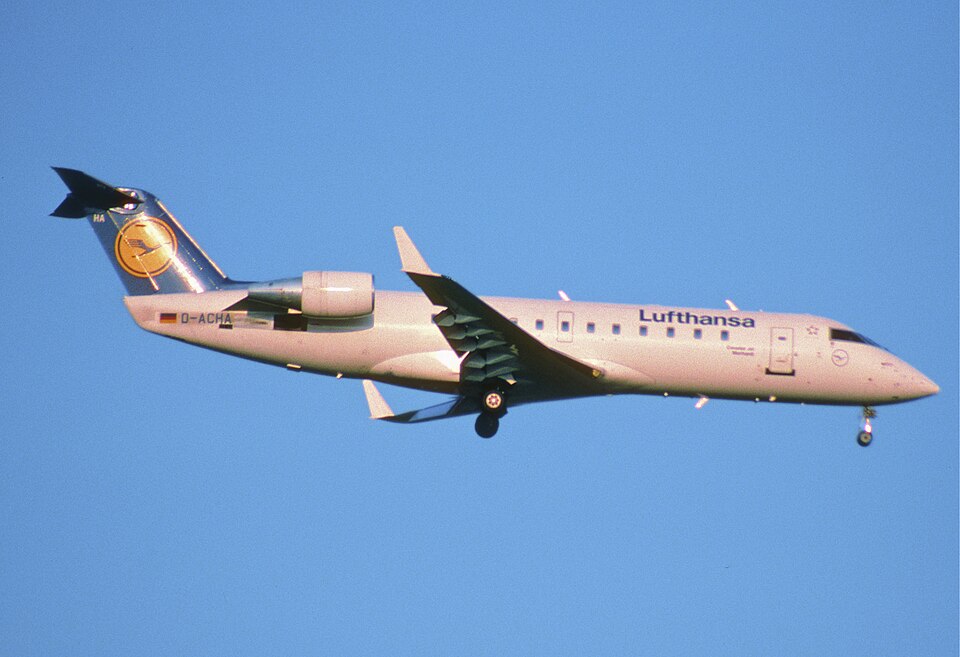
Incident Overview
On 22 April 2006, a Bombardier CL600-2B19 CRJ200, registration D-ACHA, was operating a scheduled passenger flight from London Heathrow to Dusseldorf. Shortly after takeoff, the Engine Indicating and Crew Alerting System (EICAS) displayed a 'SMOKE CARGO' warning. The crew executed the emergency procedures, declared an emergency, and returned to London Heathrow.
Landing and Response
The aircraft landed normally and stopped at the first available runway exit, where Airport Fire and Rescue Services (AFRS) were positioned. AFRS personnel reported no evidence of smoke or fire. The commander decided against evacuating the aircraft. A subsequent search of the cargo hold found no signs of fire or smoke. The aircraft was towed to a parking stand, and passengers disembarked normally.
Investigation Findings
The investigation determined that the smoke warning was spurious, likely caused by the detector reacting to dust, condensation, or electromagnetic interference. The aircraft was fitted with a modified smoke detector intended to reduce susceptibility to these factors. Following the incident, the cargo smoke detectors and fire bottles were replaced, with no further reported problems.
Previous Occurrences
A similar event involving another CRJ200 of the same operator (D-ACHH) occurred on 16 March 2005 and was documented in AAIB Bulletin 11/2005 (EW/G2005/03/09). That report detailed the smoke detector's history of spurious warnings. Airworthiness Directive TC AD CF-2001-21, issued in September 2001, mandated fitting a new design unit within 18 months. D-ACHA and all other CRJ100/200 aircraft of the operator had been modified, but recent incidents suggested the new design had not been effective.
Follow-Up Actions
The AAIB informed the Transportation Safety Board of Canada (TSB) of the findings, which were forwarded to Transport Canada and Bombardier Aerospace in November 2005. As of the bulletin date, no response from Bombardier had been received. The operator incorporated a cleaning task for the cargo smoke detector into the maintenance schedule, performed at C check intervals every 4,000 flying hours.