History of Flight
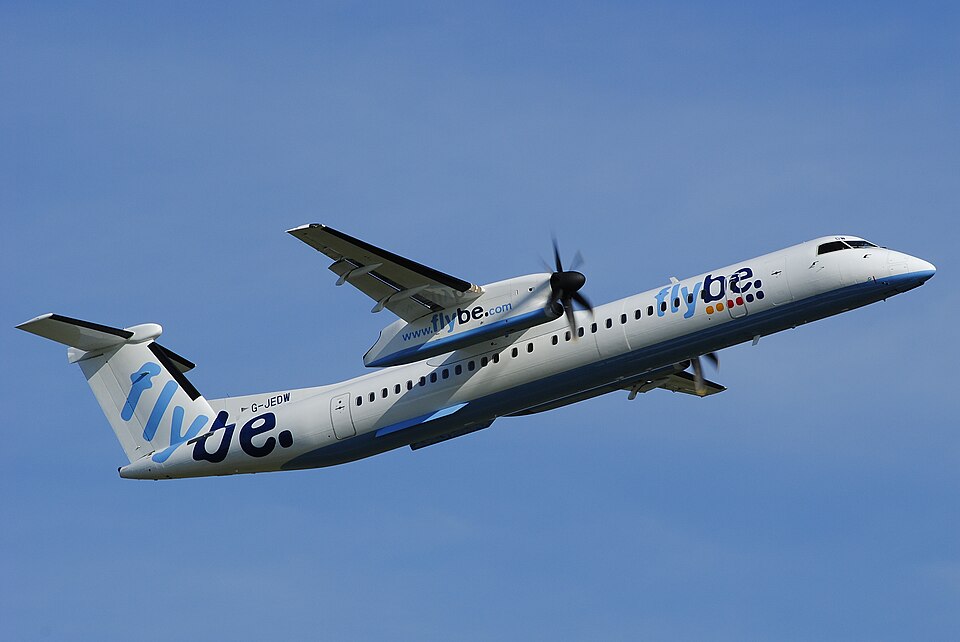
The aircraft, a Bombardier DHC-8-402 Dash 8 (registration G-JEDW), was preparing for its fourth sector of the day at Birmingham International Airport. The auxiliary power unit was unserviceable, so one engine was started on stand prior to pushback. The second engine start was delayed until after the pushback. The pushback and engine starts were uneventful, and the ‘After Start’ check list was completed. This checklist does not include a check for parking brake application.
During the pushback, the ground crew consisted of a tug driver and a coordinator connected via headset to the flight deck. At the end of the pushback, the tug driver gave the ‘brakes on’ hand signal. The coordinator instructed the commander to apply the parking brake and received a verbal “clear to disconnect” instruction. The aircraft was then chocked, and the tow bar was disconnected from the tug and then from the aircraft. The coordinator disconnected his headset and sealed the socket. He then heard the engines go to what he described as “full power” and saw the aircraft move forward. He banged on the aircraft, but it continued a few feet until hitting the tow bar. He reconnected his headset to inform the pilots.
Ground Crew Comments
The coordinator reported that after receiving the “clear to disconnect” instruction, he proceeded with the disconnection. The tug driver stated he always left a few inches between the chock and nose wheel for easy removal. The tow bar was reattached to the tug before the chock was removed. The coordinator, after being advised that both engines were running, was instructed to disconnect his headset. He heard the engines accelerate and the aircraft moved, striking the tow bar.
Discussion
Residual thrust after engine start is typically insufficient to move the aircraft. However, when the commander moved the condition levers to MAX as part of the ‘Pre-Taxi’ checks, the additional thrust became sufficient to move the aircraft forward because the parking brake was not applied and the chock had been removed. The commander was distracted by warning lights on the Master Warning Panel and motioned the co-pilot to be quiet. He cleared the ground crew to disconnect without confirming the parking brake was set. The ground crew may have misinterpreted “clear to disconnect” as meaning the parking brake was applied.
The cockpit voice recorder (CVR) was not isolated soon after the accident, so only recordings of conversations long after the event were available. The operating company subsequently reviewed its procedures for post-incident handling of CVRs and flight data recorders (FDRs) and amended them to ensure both are isolated after an incident.
Conclusion
During the pushback, a breakdown in Crew Resource Management (CRM) between the pilots led to the parking brake not being applied at the appropriate time. The conversation between the pilots and ground crew could not be confirmed, but it is possible that the instruction “clear to disconnect” was misinterpreted as meaning the parking brake had been applied. While completing the ‘Pre-Taxi’ checks, the aircraft moved forward before the pilots were ready to taxi and collided with the tow bar.