Incident and Accident Overview
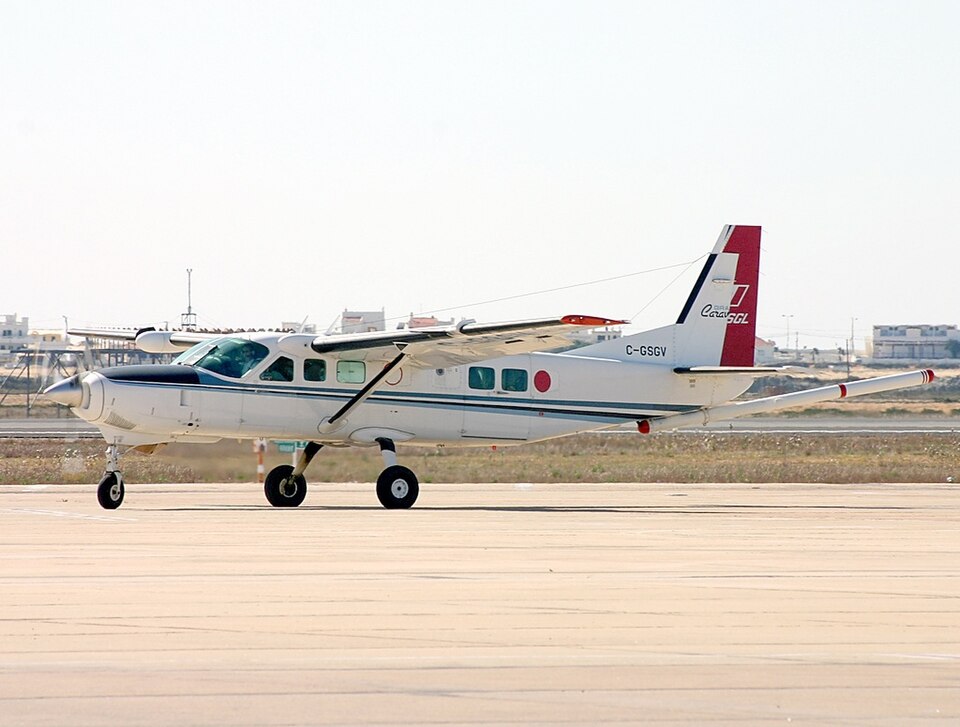
Between November 2014 and February 2015, a series of incidents and one accident involving three Cessna Grand Caravan 208B aircraft occurred during geophysical survey operations in Uruguay. The aircraft, bearing Canadian registrations C-GSGV and C-GSGZ, were part of a fleet used by a company specializing in airborne geophysical studies for oil and mineral exploration, as well as environmental and geological mapping. To obtain reliable readings, the aircraft were flown at low altitudes, increasing the likelihood of encountering birds.
Specific Events
On November 20, 2014, an incident occurred 60 nautical miles northwest of SULS, in the department of Florida (Case No. 572). On February 5, 2015, another incident took place 26 nautical miles northwest of SUDU, in the department of Durazno. The most serious event, classified as an accident, happened on February 21, 2015, 57 nautical miles southwest of SUDU, in the department of Colonia (Case No. 577). Canadian registration C-GSGV was involved in the November 20, 2014 and February 21, 2015 occurrences, while C-GSGZ was involved in the February 5, 2015 incident.
Damage Details
In the February 21, 2015 accident, the left wing sustained impact damage requiring replacement of the upper skin, lower skin, and leading edge. Additionally, the de-icing system and other components had to be replaced.
Identified Cause
The investigation determined that the cause of the accident was low-altitude flight.
Safety Recommendations
The investigating commission noted that since these aircraft must fly low to perform their surveys, no practical safety recommendation could be made to prevent recurrence, thus not fulfilling the objective of Annex 13 to the Chicago Convention.