Accident Sequence
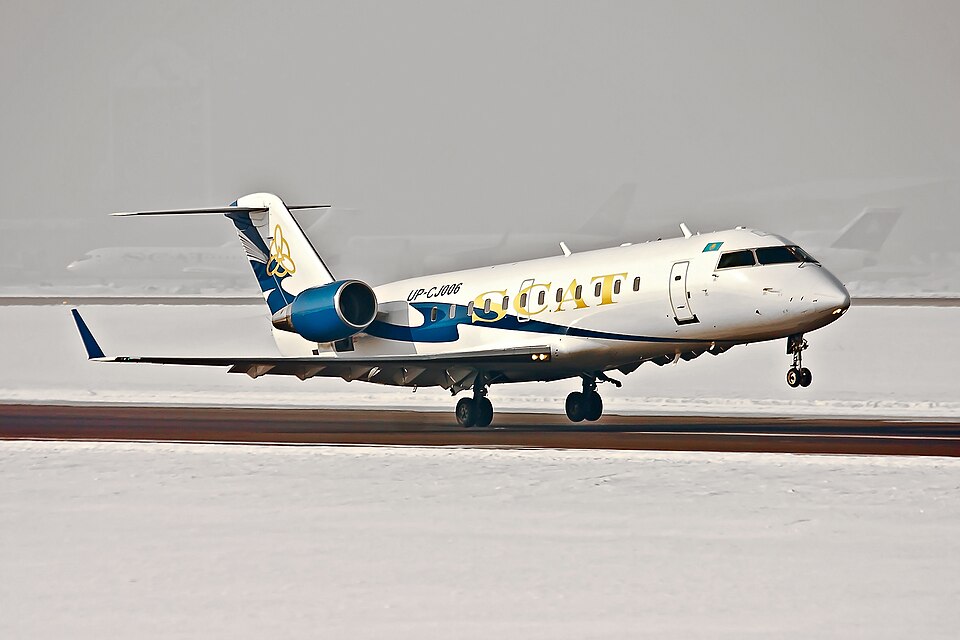
A CRJ-200 aircraft, registration UP-CJ006, was operating a flight from Kokshetau to Almaty. During the descent to Almaty Airport, the crew was cleared for an ILS Cat IIIb approach to runway 23R. On short final at an altitude of 180 metres, the captain decided to abandon the landing and initiated a go-around. The autopilot was deactivated and the TO/GA mode was activated. Four seconds later, the captain pushed the control column forward, causing the aircraft to descend. The EGPWS alarm sounded but the crew did not respond. The aircraft impacted the ground at a pitch angle of -16° with a descent rate of 20–30 metres per second, disintegrating in a snow-covered field. The wreckage was found 1,400 metres short of the runway. All 21 occupants were killed.
Weather Conditions
Horizontal visibility was 200 metres, vertical visibility was 40 metres, and runway visual range for runway 23R was 275–250–225 metres respectively. Due to the poor weather, the captain became stressed and experienced a strong emotional reaction. The visibility conditions required a Cat IIIc approach, which the crew was not certified for.
Probable Cause
The official investigation determined that the accident occurred during a go-around in instrument meteorological conditions without visual contact with ground references, necessitated by the mismatch between actual weather and the crew's minimum landing certification. The elevator deflection toward a dive caused the descent and collision. The most likely contributing factors included: partial loss of performance of the pilot in command, who at impact was not in a working position; lack of CRM and violation of the Fly-Navigate-Communicate principle, with the co-pilot distracted by external radio communication; lack of response to EGPWS; somatogravic illusions causing a nose-up perception; increased emotional stress from unjustified weather improvement expectations; and failure to comply with health examination requirements, leading to the pilot flying without proper rehabilitation after surgery.