History of the Flight
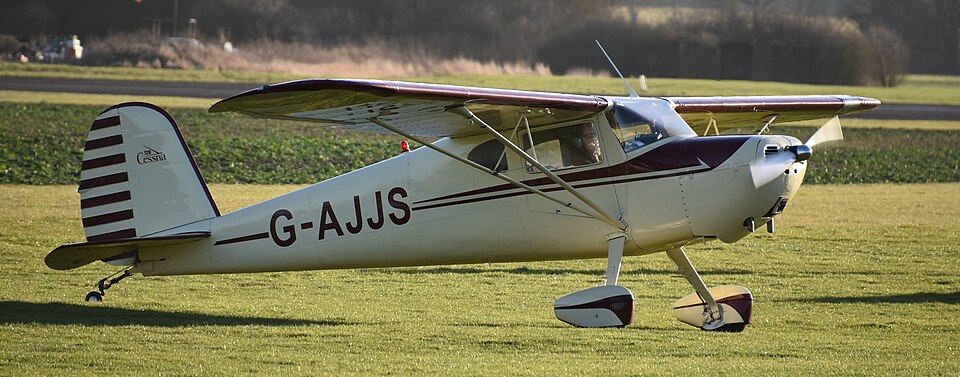
The aircraft, a Cessna 120 (registration G-AJJS) powered by a single Continental O-200-A piston engine, departed Sywell Airfield at 1310 hrs on 9 May 2010 for a private flight to Popham Airfield. The pilot and one passenger were on board. The aircraft was filled with Mogas in both wing tanks before departure.
While cruising at 1,800 ft, the pilot applied carburettor heat several times as a precaution. Approximately 30 minutes after takeoff, the engine suddenly lost power. The pilot again applied carburettor heat and turned toward Bicester Airfield, which was nearby. Engine power was temporarily restored but then reduced again. The pilot confirmed fuel remained in the selected tank but did not switch to the other tank. Both magnetos were selected on and the mixture was rich.
Unable to maintain altitude, the pilot continued toward Bicester for a forced landing. When the engine stopped completely at about 200 ft, the pilot landed at the edge of an adjacent field. During the landing, the aircraft sustained severe damage to the landing gear, one wing, fuselage, and engine cowlings. Both the pilot and passenger were uninjured and left the aircraft unaided.
Possible Cause
The AAIB report noted that the use of Mogas has been associated with vapour lock, but this was considered unlikely given the high-wing aircraft and prevailing conditions. An aftercast of weather along the route indicated that at the flown altitude, the temperature was approximately 5°C and dew point approximately 2.0°C, conditions that would place the aircraft at risk of severe carburettor icing at any power setting. Despite the pilot's use of carburettor heat periodically and again when power was lost, it was possible that this was insufficient to prevent or remove ice buildup once power loss became significant.
It was also possible that debris in the fuel system restricted fuel flow; selecting the other tank might have restored power. The aircraft was probably damaged beyond economic repair, and the owner had not carried out further inspection at the time of writing. Therefore, an additional, still unidentified problem with the engine or fuel system remained possible.