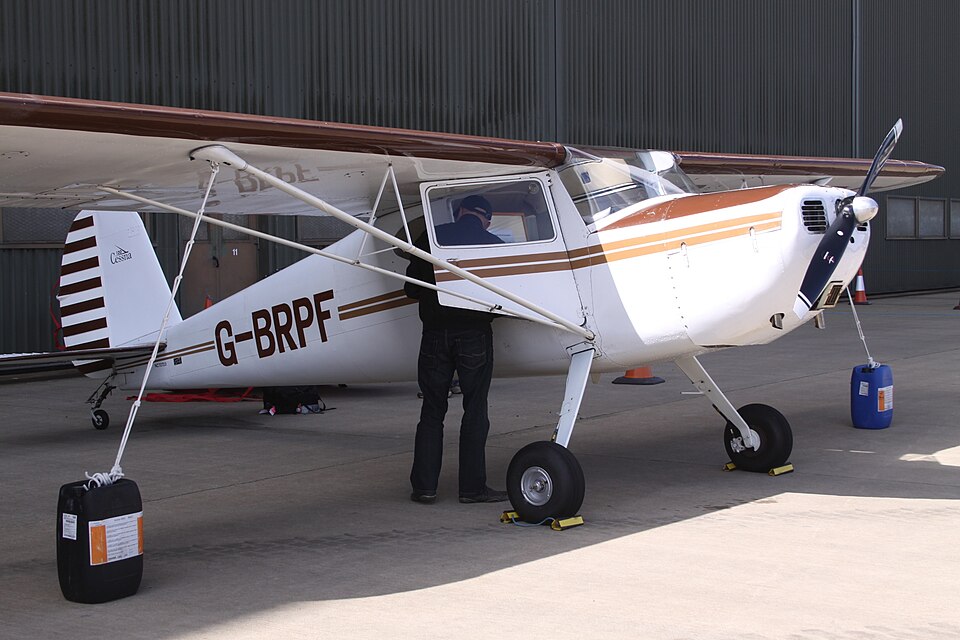
Accident Overview
On 23 May 2004, a Cessna 120, registration G-BRPF, was involved in an accident during landing at Sibsey Airfield near Boston, Lincolnshire. The aircraft, manufactured in 1946 and powered by a Continental Motors Corp C85-12 piston engine, sustained extensive damage. The pilot held a Private Pilot's Licence and had 1,080 hours of flying experience, with 895 hours on type.
Flight Details
The pilot and a passenger departed Breighton, North Yorkshire, on a pleasure flight to Sibsey Airfield. Before landing, the pilot overflew the airfield from the north at 1,000 feet above ground level to assess wind direction from a windsock, which indicated an east-north-east wind at less than 5 knots. Noting power lines near the western end of the airstrip and a clear approach from the east, he chose to land from the east, accepting a slight tailwind. The 400-metre grass runway was dry, and the pilot, familiar with the airfield from previous visits, believed the length was adequate.
Landing and Rollout
A left-hand circuit was flown, with an approach speed of 58 to 60 mph IAS, slightly lower than normal to compensate for the tailwind. The aircraft made a three-point touchdown just inside the threshold, leaving virtually the entire runway ahead. However, during the rollout, the aircraft did not decelerate sufficiently. The pilot applied heavy braking, causing the aircraft to tip onto its nose. Momentum carried it over, and it came to rest inverted near the western end of the runway.
Damage
The aircraft fuselage was extensively damaged. Additional damage occurred to the tail fin, tailplane, and propeller. The pilot and passenger were wearing three-point harnesses, which remained intact and protected them from serious injury.
Pilot's Assessment
After the accident, the pilot calculated that the expected stopping distance under the given conditions was approximately 720 feet. This was based on the Operating Handbook landing distance of 350 feet, factored by 1.2 for short dry grass, 1.2 for the tailwind, and an overall safety factor of 1.43. He attributed the failure to stop to an increase in tailwind strength that was not apparent during the approach.