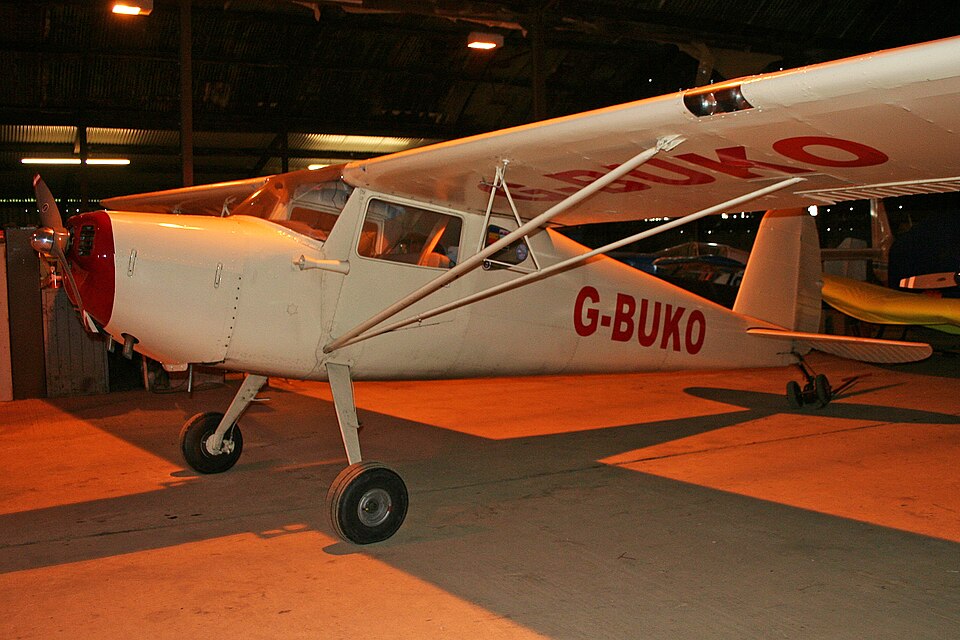
Background
On 28 December 1997 at 1330 UTC, a Cessna 120 (registration G-BUKO) operated by a private pilot departed from Manor Farm, west of Salisbury, Wiltshire. The aircraft was manufactured in 1947 and powered by a single Continental Motors Corp C85-12 piston engine. The pilot held a Private Pilot's Licence, was aged 30, and had 274 total flying hours, of which 210 were on type. The flight had one pilot and one passenger on board; both were uninjured.
Accident Sequence
The farm strip was oriented 09/27, 447 metres long, and sloped downward to the east. Two bushes beside the strip marked distances of 180 metres from each end, with 87 metres between them. The day before the accident, the pilot had aborted two takeoffs on Runway 27 into a 7 kt headwind; the strip was soft with long wet grass. The third takeoff succeeded after grass was flattened. On the accident day, loading was similar but with two fewer gallons of fuel, and conditions were similar. The aircraft had just been successfully operated by the owner/operator. Wind was 220° at 2 to 3 kt, temperature +3 °C.
Given the previous day's difficulties, the pilot decided to take off from Runway 09, using the downslope and relying on experience that a light tailwind had negligible effect. The engine was run up to 2,100 RPM and a short-field takeoff was initiated. Acceleration appeared normal. At the second bush marker (180 metres remaining), the pilot attempted to rotate but judged the aircraft not ready to fly, returning the control column to a takeoff-run position. He held it for a few seconds before a second rotation attempt, which also failed. He then closed the throttle and applied brakes. Despite trying to ground loop near the runway end, he could not prevent the aircraft from crashing through a barbed wire fence into a cutting of a farm track adjacent to the eastern strip end. The aircraft stopped abruptly in the far bank of the cutting.
Aftermath
The pilot switched off fuel and electrics, then exited with the passenger and summoned assistance on a mobile telephone. In a subsequent report, the pilot noted that wind occasionally picked up to 5 or 6 kt and that the strip's surface condition adversely affected braking performance. He considered the decision to abort preferable to continuing with a high risk of striking an obstacle at speed or stalling due to insufficient airspeed. The aircraft sustained damage: propeller bent, right-hand landing gear torn off, fuselage distorted in the cabin area, and right-hand wing tip damaged.