History of the Flight
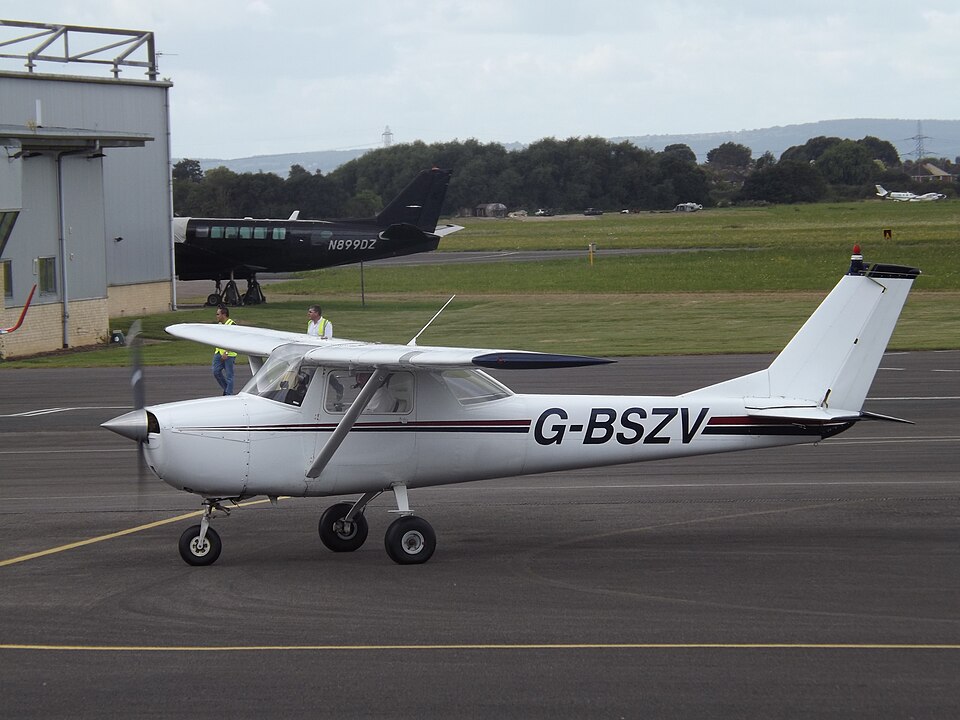
On 15 March 2007, a student pilot was conducting a solo training flight at Sandown Airport on the Isle of Wight. The aircraft, a Cessna 150F registration G-BSZV, was on an approach to grass Runway 23. The reported wind was 230° at 10 knots. During what he described as a normal approach, the pilot selected full flap at 400 ft above ground level, informed the aerodrome flight information service officer (AFISO) of his position on finals, and selected carburettor heat cold at 250 ft. He crossed the runway threshold at approximately 10 ft and raised the nose to flare for landing. The aircraft bounced, and the pilot stated that a gust of wind from the north-northwest caused the aircraft to roll left. He applied right rudder and right aileron inputs but was unable to level the aircraft. Judging that the aircraft was unstable, he decided not to attempt a go-around. On touchdown, with full right rudder still applied, the nose landing gear leg collapsed. The aircraft continued for a short distance before coming to rest in a nose-down attitude with the base of the engine cowling on the runway. There was no fire. The pilot switched off electrical power and vacated the aircraft uninjured and without assistance. The aerodrome fire and rescue service attended shortly afterward. The AFISO on duty stated that the aircraft bounced after its first touchdown and that the subsequent touchdown was on the nosewheel. Ground marks identified by the AFISO indicated that the aircraft had touched down more than once.
Engineering Inspection
Inspection revealed that the nose landing gear leg failed at its attachment to the engine mount, rotating aft and causing damage to the base of the engine cowling and lower fuselage skin aft of the firewall. Contact with the runway damaged the propeller and shock-loaded the engine. There was no evidence of any pre-existing mechanical defect.
Discussion
The investigation discussion noted that inexperienced pilots might attempt to control a bounce on touchdown by lowering the nose of the aircraft, which can result in a touchdown on the nosewheel with a high rate of descent. The nose landing gear of most aircraft is designed to provide stability and control on the ground but is not intended to support the loads encountered on first contact with the runway during landing. Additionally, in the Cessna 150, the nosewheel turns whenever an input is made on the rudder pedals. Therefore, when the pilot landed with full right rudder applied, the nosewheel would have been turned to the right, increasing the load on the nose landing gear leg when the nosewheel touched the runway surface.