History of the Flight
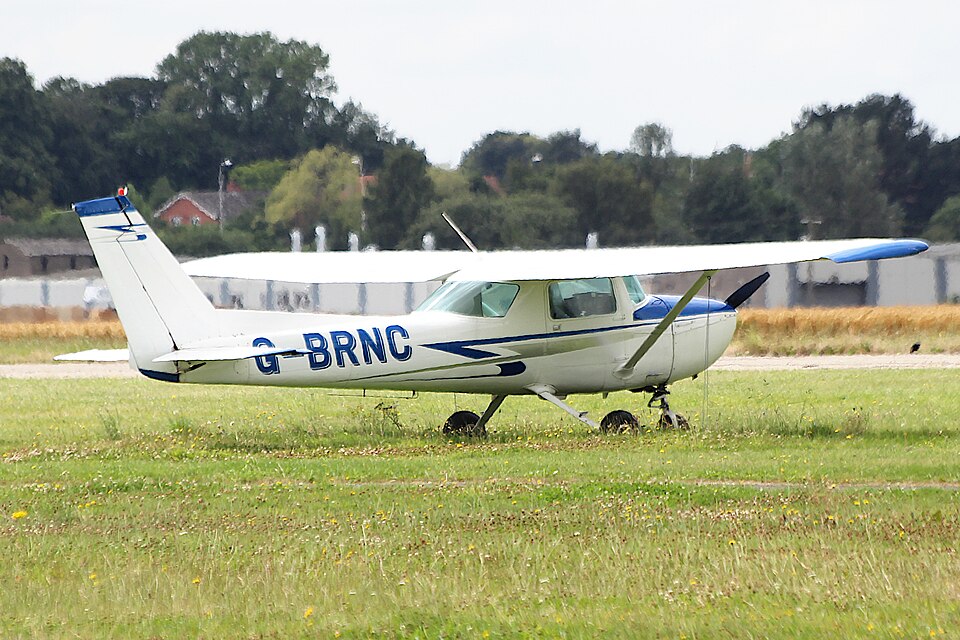
The pilot, who held a Private Pilot's Licence with 143 hours total flying experience (137 on type), had flown a local flight and positioned the aircraft to land on grass Runway 06 at Netherthorpe Airfield. The wind was from 030° at 5 kt. The approach was flown without difficulty, and the aircraft landed 'on the numbers' with a reported airspeed of about 60 kt, some 8 kt above the normal 50 ft threshold speed of 52 kt.
Runway Overrun
The aircraft continued down the runway, past the intersection with Runway 18/36. The pilot thought there was enough runway left to stop, but it soon became clear that the aircraft was not slowing down enough to stop within the remaining distance. He was beyond the point at which a go-around would have been possible. He continued to apply brakes and purposely steered the aircraft to the left. The aircraft departed the runway and struck a steel gate, causing damage to the engine cowling and propeller. The pilot was uninjured.
Runway Characteristics
Runway 06 at Netherthorpe has a grass surface and a declared landing distance available (LDA) of 407 m. It also has a 1.9% downslope, and on the day of the accident the grass was wet.
Performance Considerations
According to the CAA Safety Sense Leaflet 7c 'Aeroplane Performance', it is strongly recommended that pilots of private flights apply various factors to the landing performance information in the flight manual, as light aircraft flight manuals usually contain unfactored performance data. For the accident flight, relevant factors included: wet grass (factor 1.35), a 2% downhill slope (factor 1.1), and an additional safety factor of 1.43. For G-BRNC, the flight manual declared a landing distance required of approximately 330 m. Applying the factors gave a distance of 701 m, which was 294 m longer than the declared LDA for Runway 06. Additionally, the faster approach speed further extended the landing distance required.
Pilot's Statement
The pilot, in a full and frank statement, attributed the accident to his failure to initiate a go-around at an early stage of the landing. He also considered that his approach speed, the wet grass runway, and the lack of a headwind were contributory factors.