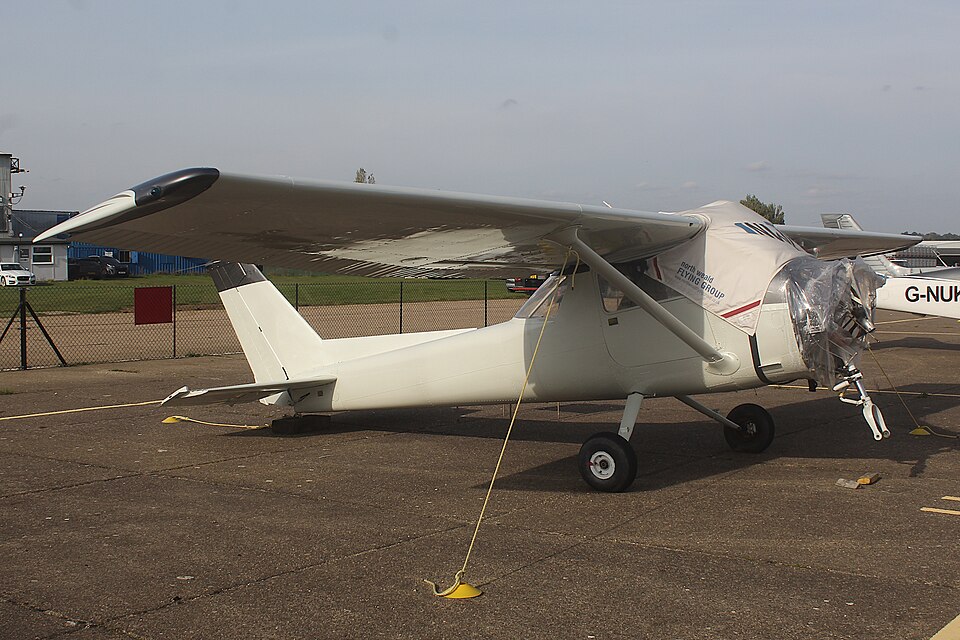
History of the Flight
The student pilot, with 18 hours total flying time, was returning to Andrewsfield after his first solo navigation flight. The weather was fine and the approach was normal. As the student started to flare, the aircraft suddenly sank and landed on its main wheels before bouncing back into the air. The student maintained the aircraft attitude and allowed it to settle back onto the runway. However, the aircraft made a firm touchdown, and the student heard a noise as it once again bounced into the air. At this point, he commenced a go-around and simultaneously heard his instructor, who was monitoring the flight on a portable radio, inform him that the nosewheel had separated from the aircraft. The air/ground operator asked the student about his fuel state and any other problems. The student responded calmly, stating he had plenty of fuel and no other apparent problems, and was advised to continue flying the circuit pattern while they considered the best course of action.
The airfield manager, the student's instructor, and an engineer discussed the situation. They felt that landing at Andrewsfield might cause the nose landing gear leg to dig into the grass runway, potentially turning the aircraft over. Consideration was given to diverting to Southend, but the student was unfamiliar with that airfield, and the navigation would have placed additional pressure on him. A safer option was deemed to be North Weald, which had a long asphalt runway and where the student had flown on multiple occasions.
While the airfield manager contacted North Weald to inform them of the situation, the student's instructor departed Andrewsfield in a second aircraft piloted by another instructor. This second aircraft escorted G-NWFA to North Weald. During the transit, the student's instructor briefed the student on the actions to take to land with the nosewheel missing. The instructor's aircraft landed first while the student was instructed to fly the circuit pattern until emergency vehicles were in place.
The student made a normal approach with full flap selected. Once the main wheels touched the runway, he closed the throttle and mixture lever, holding the nose of the aircraft up for as long as possible. The aircraft came safely to a halt on the runway.
Engineering Examination
The nose landing gear fork had failed where it attached to the nose oleo. The right-hand side of the fork, along with the nosewheel, had separated from the aircraft at Andrewsfield. The left side of the fork remained attached to the oleo and was badly abraded during the subsequent landing at North Weald. No visible damage was found to the nose landing gear supports or the engine firewall, and the only other visible damage was to the tips of the propeller blades. A metallurgist inspected the fracture surfaces of the fork and found no evidence of any pre-existing damage, commenting that the failure was consistent with the fork failing as a result of a heavy landing.