Accident Overview
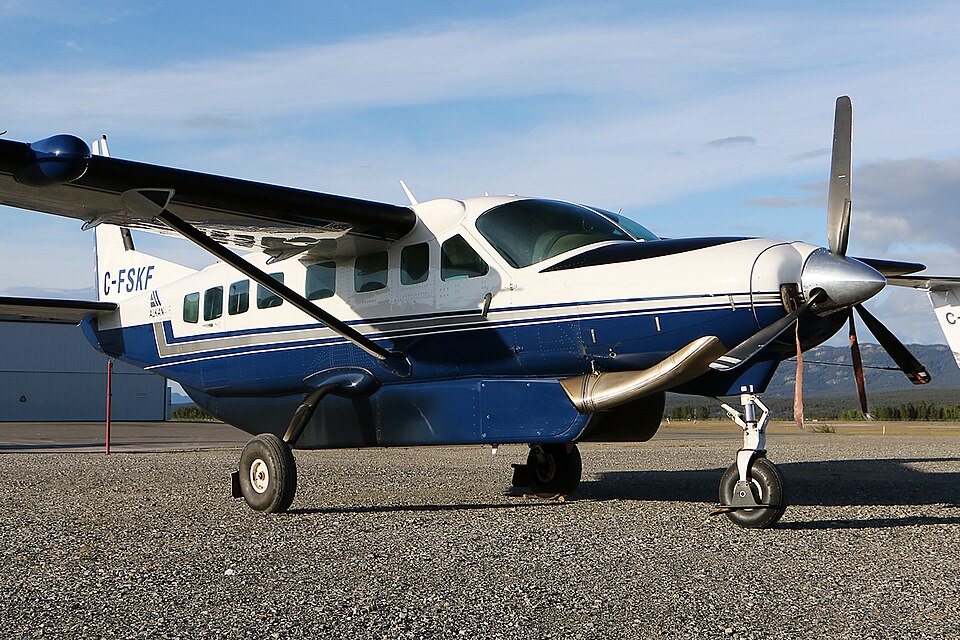
On 06 August 2019, at 1101 Pacific Daylight Time, an Alkan Air Ltd. Cessna 208B Grand Caravan (registration C-FSKF, serial number 208B0673) departed Rau Strip, Yukon, on a visual flight rules company flight itinerary to Mayo Airport, Yukon. The aircraft carried one pilot, one passenger, and cargo. At 1113, the flight entered instrument meteorological conditions and struck rising terrain in a box canyon, approximately 25 nautical miles east-northeast of Mayo Airport, at an elevation of 5500 feet above sea level.
Rescue and Response
The Canadian Mission Control Centre did not receive a signal from the aircraft’s 406 MHz emergency locator transmitter. Eyewitnesses from a nearby exploration camp arrived at the crash site about one hour after the accident. Royal Canadian Mounted Police and emergency medical services reached the site approximately 90 minutes after the accident.
Injuries and Damage
The pilot and passenger received fatal injuries. The aircraft was destroyed, and a brief post-impact fire occurred.
Probable Cause (Official Findings)
The investigation identified the following causes and contributing factors: 1. The pilot’s decision making was influenced by several biases, leading to departure and continued flight into poor weather conditions in mountainous terrain. 2. High speed at low altitude and low forward visibility reduced the pilot’s opportunities to take alternative action to avoid terrain. 3. Within the box canyon, the canyon floor elevation increased abruptly within less than one nautical mile, and low visibility prevented the pilot from detecting this and taking sufficient action to prevent collision with terrain. 4. When the pilot turned into the box canyon, terrain awareness and warning system aural alerts were ineffective, either because he had heard multiple similar alerts in preceding minutes or because he had silenced them.
Additional Findings
The pilot held a valid instrument rating and the aircraft was equipped to fly in instrument meteorological conditions. However, there were no scenarios in the pilot’s flying history on the Cessna 208B Grand Caravan or in his training where a transition from visual flight rules to flight under instrument flight rules in an emergency was performed.