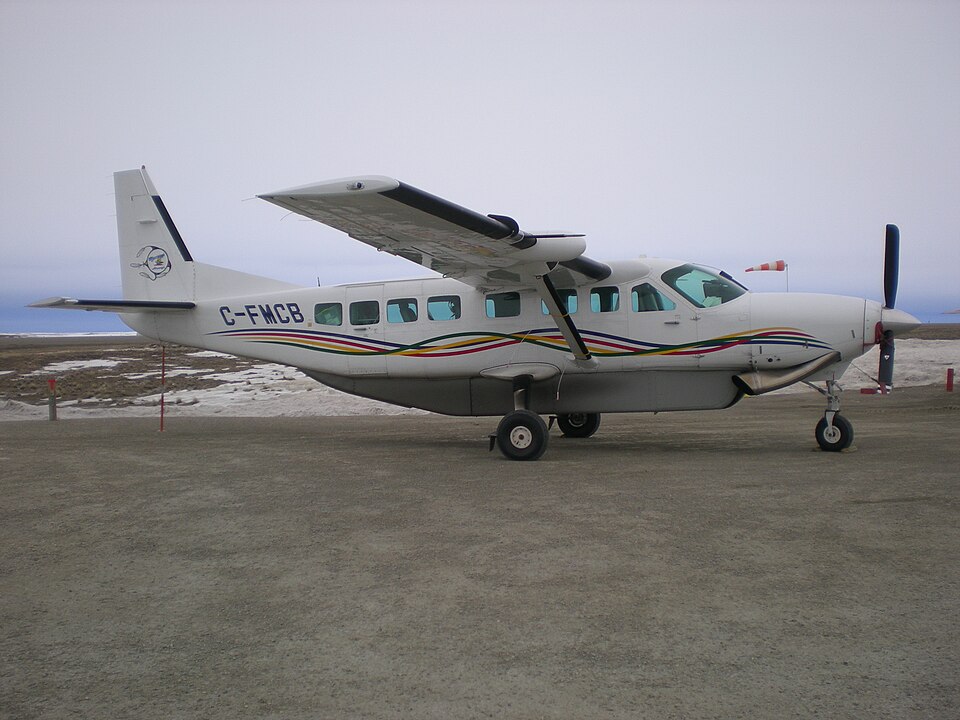
Incident Description
On a flight from Pukatawagan to The Pas/Grace Lake Airport, Manitoba, a Cessna 208B (registration C-FMCB, serial number 208B1114) operated by Missinippi Management Ltd (Missinippi Airways) under Beaver Air Services Limited Partnership began its takeoff roll on Runway 33 at approximately 1610 Central Daylight Time. The aircraft did not become fully airborne. The pilot rejected the takeoff, applying reverse propeller thrust and braking, but the aircraft departed the end of the runway, continued down an embankment, and entered a ravine. A post-crash fire ensued.
Injuries and Damage
One passenger was fatally injured. The pilot and the seven other passengers egressed from the aircraft with minor injuries. The aircraft was destroyed. The emergency locator transmitter did not activate.
Investigation Findings
The official investigation identified several contributing factors. Runway conditions, the pilot's takeoff technique, and possible shifting wind conditions combined to reduce the aircraft's acceleration during the takeoff roll, preventing it from attaining takeoff airspeed. The pilot rejected the takeoff past the point from which a successful rejected takeoff could be completed within the available stopping distance. The steep drop-off and sharp slope reversal at the end of Runway 33 contributed to occupant injuries and fuel system damage, which in turn caused the fire, complicating passenger evacuation and preventing rescue of the injured passenger. The deceased passenger was not wearing the available shoulder harness, which contributed to serious injuries from the impact at the bottom of the ravine and ultimately to death in the post-impact fire.
Risk findings noted that pilots unaware of increased aerodynamic drag during soft-field takeoff techniques may experience unexpected reductions in takeoff performance. Incomplete passenger briefings or inattentive passengers increase the risk of failed egress. Lack of data recordings may preclude identification of safety deficiencies. Although the runway at Pukatawagan and many other aerodromes comply with standards (TP 312E), terrain beyond runway ends may increase damage and injury likelihood in overruns. Transport Canada's responses to TSB recommendations on post-impact fire risk have been rated Unsatisfactory, leaving a continuing risk in impact-survivable accidents. The lack of accelerate-stop distance information impedes crew planning for takeoff-reject points.
Other findings noted several anomalies in the engine's power control hardware, but no indication they contributed to the occurrence.