Synopsis
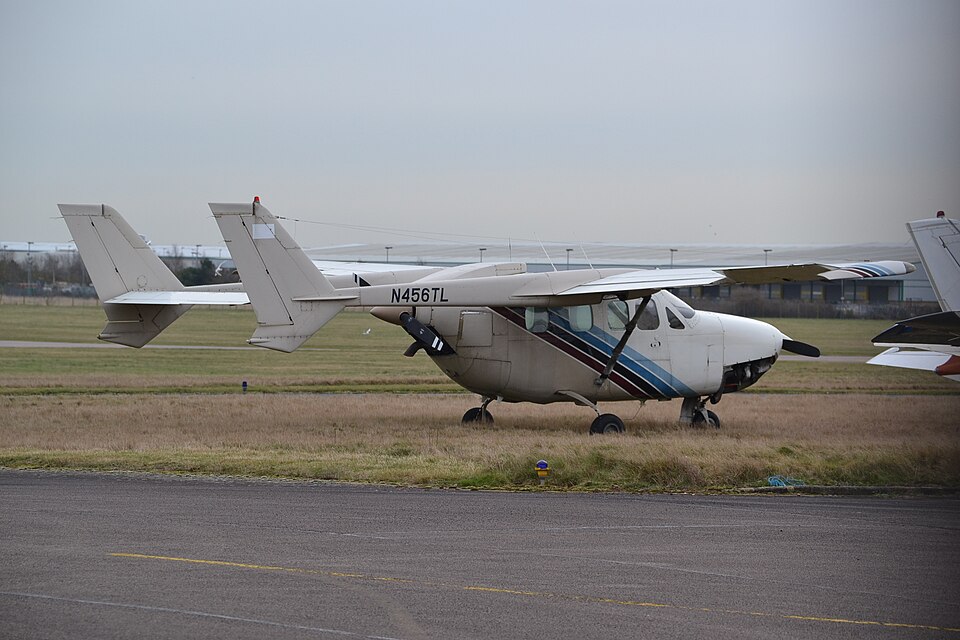
On 3 May 2003, a Cessna 337 GP (registration N456TL) operated as a private flight from Coventry Airport, West Midlands, experienced a landing gear malfunction during the final approach. The right main landing gear failed to lock in the down position. After multiple attempts to rectify the issue, the pilot performed a gear-up landing on grass. The aircraft sustained minor damage to the lower fuselage skin and the rear propeller. All three occupants vacated the aircraft, with one minor injury reported.
Flight History
The aircraft had departed on a test flight following an annual inspection. During the final approach, when the pilot selected the landing gear down, the green down-and-locked indicator light did not illuminate. After retarding the throttles confirmed the gear warning horn, a go-around was initiated. The gear recycling attempt revealed that the landing gear motor circuit breaker had tripped. Resetting the breaker and reselecting gear down again produced a strong smell of electrical burning, prompting the pilot to pull the breaker and return to the airport vicinity. The emergency hand pump procedure, performed exactly as per the Pilot's Operating Handbook, failed to lock the right main gear down. A rear passenger, a licensed aircraft engineer, observed that the right main gear was not fully extending. The nose and left main gear were confirmed down by another aircraft and air traffic control. Four further hand pump attempts and flight manoeuvres were unsuccessful. After coordinating with ATC and the airport fire service, the pilot executed a gear-up landing on the grass adjacent to Runway 23, shutting down both engines in sequence. The aircraft was recovered on a sled.
Engineering Investigation
Post-incident testing on jacks showed that when the gear was lowered using the emergency hand pump, hand resistance could prevent full extension, indicating an internal leak across the piston seals of the right main gear hydraulic actuator. Under air loads, such leakage would slow extension enough to allow the downlock actuator to begin engaging prematurely. The downlock stop bolt on the gear leg then contacted the downlock cam; while the gear is designed to push the cam forward, a burr on the cam caused the bolt and cam to lock together, leaving the gear partially extended. Witness marks on the cam suggested this issue had existed for some time but had been obscured by grease during the annual inspection. Ground retraction tests during the annual check had been satisfactory. After replacing the actuator seals and the downlock cam, ground retractions with simulated air loads were completed satisfactorily.
Conclusion
The landing gear malfunction was attributed to a combination of an internal hydraulic leak in the right main gear actuator and a burr on the downlock cam, which prevented the gear from fully extending and locking down.