Incident
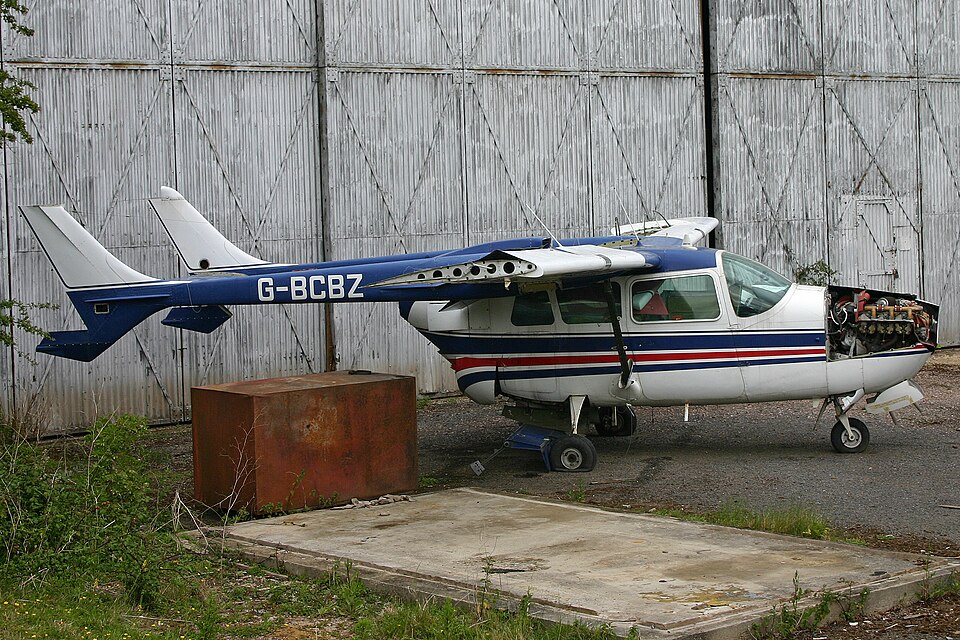
On 7 July 2003, a Cessna 337C Super Skymaster, registration G-BCBZ, was involved in an accident during a touch-and-go landing at Gloucestershire Airport. The pilot, acting as commander for a familiarisation flight, had intended to select the flap lever to the UP position after touchdown but instead operated the landing gear retraction lever. The nose of the aircraft lowered, and the front propeller struck the runway. The pilot immediately closed both mixture controls and pulled the control column fully back, and the aircraft slid to a halt to the left of the runway centre line. No fire occurred, and all three occupants—the pilot, the aircraft owner, and a friend—exited the aircraft normally without injury.
Aircraft and Crew
The aircraft was a 1968 Cessna 337C Super Skymaster, a twin-engine centre-line thrust aeroplane powered by two Continental IO-360-C piston engines. The commander held an Airline Transport Pilot's Licence and was 33 years old, with a total flying experience of 4,750 hours, none of which were on the Cessna 337 type. The owner of the aircraft, who held a Class Rating Examiner, accompanied the pilot in the right seat, and a friend sat in the right rear seat.
Flight History
Before the flight, the pilot reviewed the emergency checklist and discussed the aircraft's systems with the owner during a pre-flight inspection. The aircraft departed from Runway 27 and completed general handling, including one stall in the approach configuration. The aircraft then returned for a touch-and-go landing on Runway 22. After a smooth touchdown, the pilot, mindful of the modest runway length (972 metres declared take-off distance available) and light surface wind from 220° at 7 kt, reached for the flap lever but inadvertently retracted the landing gear. The 'weight on wheels' switch, located on the nose landing gear, was intended to prevent gear retraction while the aircraft was on the ground, but the extension of the lightly loaded landing gear oleo may have disabled the protection circuit. Subsequent testing showed the switch operated correctly. The main landing gear did not retract because the aircraft's weight overcame the hydraulic power available.
Discussion
The pilot later identified several factors that he believed contributed to the inadvertent action, including fatigue, lack of familiarity with the aircraft, frequent changes between left and right seats due to instructional duties, the short runway with light wind, and concerns about detecting a rear engine failure during takeoff. The pilot suggested that the accident could have been avoided if he had asked the owner, seated nearer to the flap lever, to retract the flaps, or if he had been accompanied by an instructor, although no requirement existed for such.